Vogue CS in English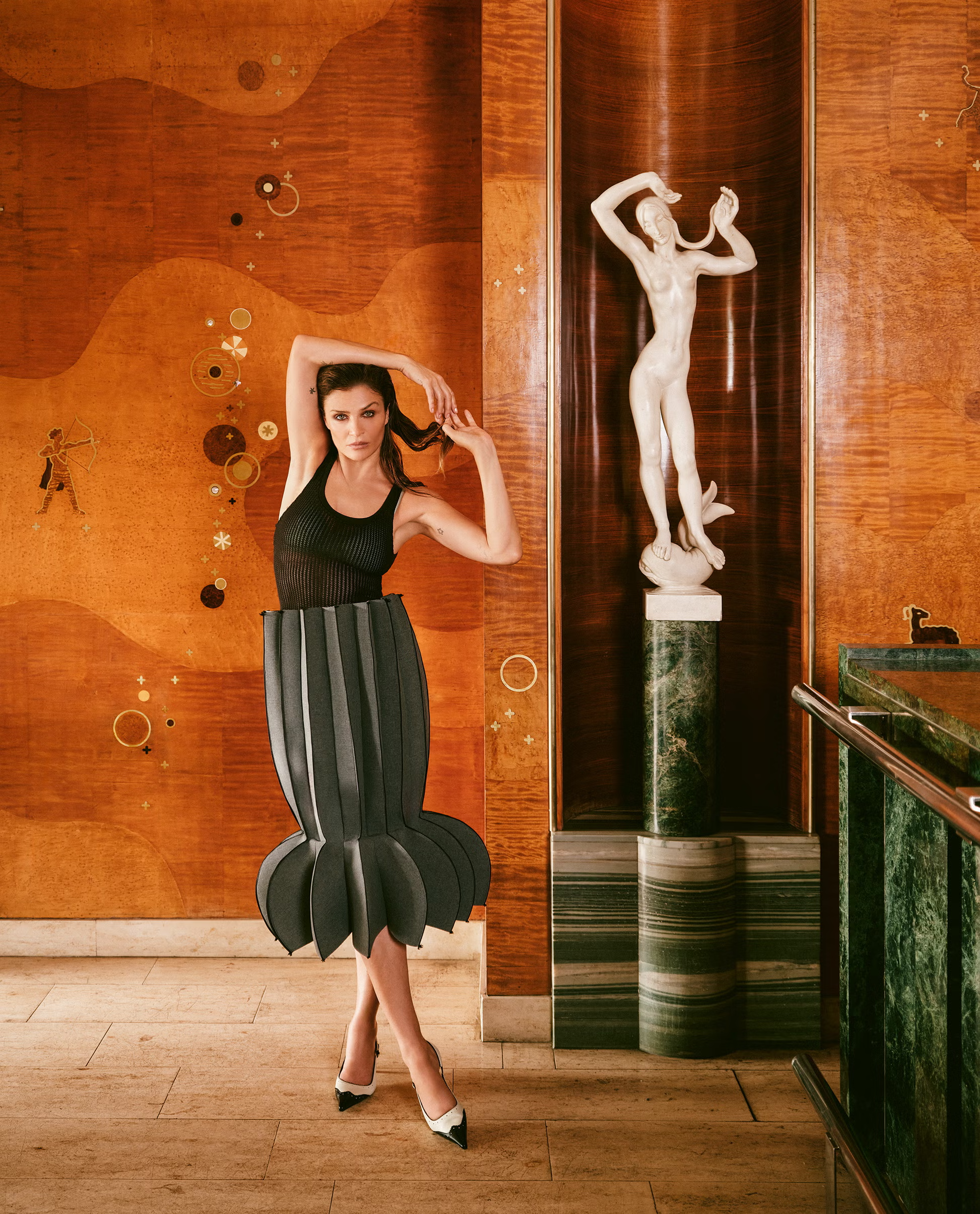
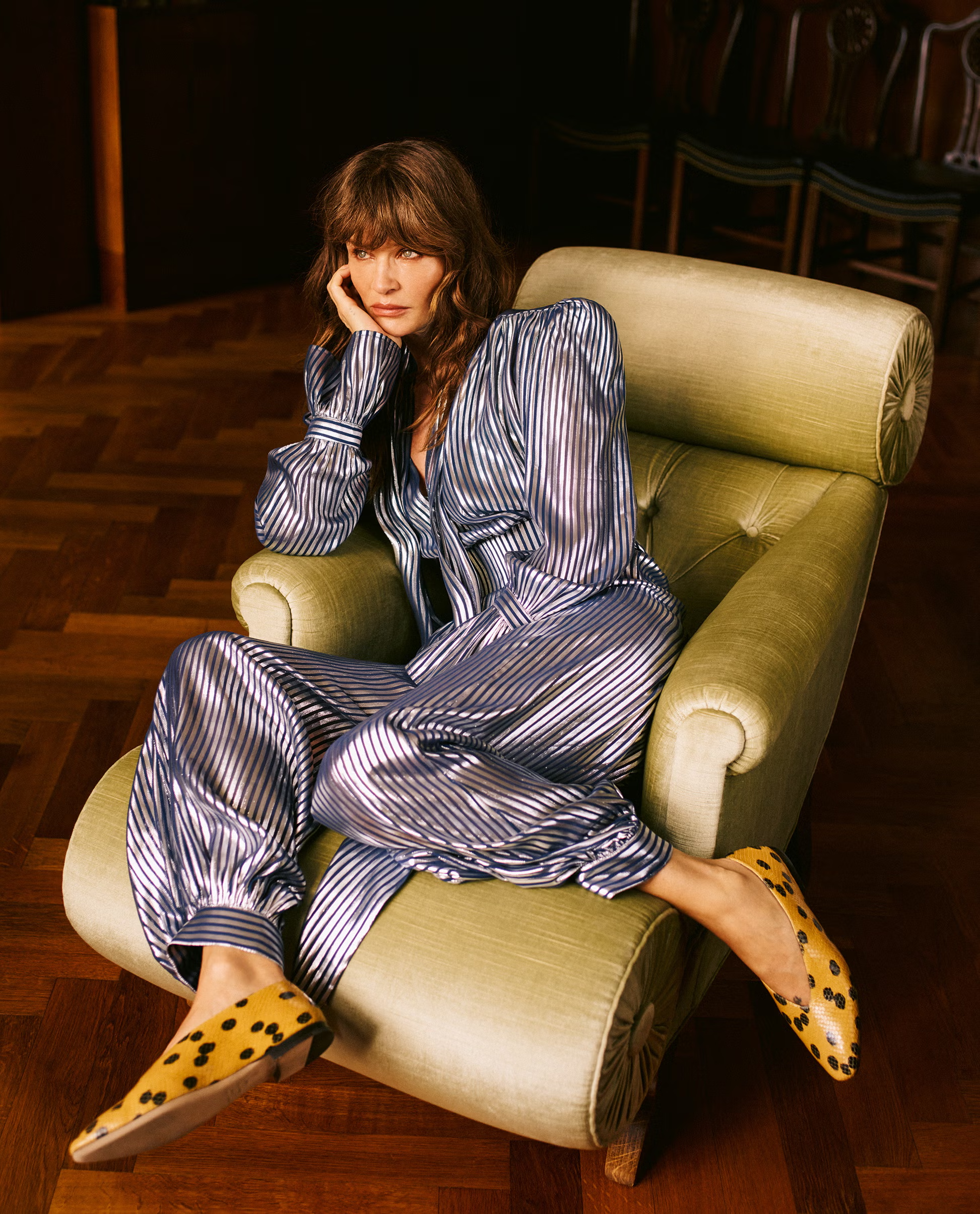
Helena Christensen: Timeless in the Frame, Behind the Scenes with Hana Knížová
Barbora Brušková23. 9. 2026
Foto: Hana Knížová
Helena Christensen
The theme of this issue is Behind the Scenes. After decades on both sides of the camera, where do you think the real story of a fashion image begins?
Because I’m so fortunate to have worked on both sides of the camera throughout my career, I know that a story begins for me in the mind of a photographer, an art director or a magazine editor, and it’s always a collaborative effort. As a photographer myself, I think that tiny little seed perhaps starts to grow in the photographer’s mind, not even in terms of a fashion story, but in terms of anything that sparks an idea that later turns into a photograph. It might just be a fleeting moment or a sudden inspiration. But I love how, in the fashion business, there’s really a collaborative effort between everyone to create a fashion story. It might start with an editor’s idea or a photographer’s vision, with the way they see it, and then everyone comes in: the styling, the glam team. And then, when the model arrives, everything might change again, because it has so much to do with how that person perceives it all and how they decide to give it life. It’s a really beautiful story that comes to life in the end through so many different people.
As both a model and a photographer, what allows someone to be truly seen rather than simply looked at?
Yes, that’s always the big mystery: how to make a photo captivating. I think some people are just born with an eye. They just know, instinctively and intuitively, maybe even subconsciously, what would make a great image, whether it’s a scene, a moment, a portrait of someone, a still life or nature. And it makes such a big difference how you frame what you capture, and at which exact, defining nanosecond you decide to click the shutter on your camera or phone to capture that moment. As a photographer, I’ve been obsessed all my life with finding those very special moments that really make a difference when people see them.
Foto: Hana Knížová
Helena Christensen
Has photography revealed more to you about the world, or about yourself?
Definitely a mixture of both. When you’re a photographer, the most wonderful thing is discovering everything over and over again, because you always look at things differently and focus on very small parts of life and the world. You really get into the details and see everything from a different perspective than other people might, and by doing so, I think you learn a lot about life and about yourself at the same time.
The issue is also about non-verbal communication. Do you know when everyone in the room is speaking the same language even if no one is talking?
The most beautiful thing in life is silence, when everyone understands each other regardless of where they’re from, what they believe in, or what they stand for. When there’s this understanding that’s kind of under the radar, that’s a beautiful silence. In terms of photography, it’s a powerful silence when you walk through a room and everyone feels something different when they see it – all these emotions. There’s a lot of intimacy in that.
What role does silence play in your work?
I become very quiet when I’m taking photos, and I go into a place within myself where I shut everything else around me out. It’s a little bit the same when I model, but even more so when I take photos. You become so concentrated that all you can hear is your very slow breathing, and in those moments, I just see everything in images. No matter what noise there is around me, it all becomes quiet.
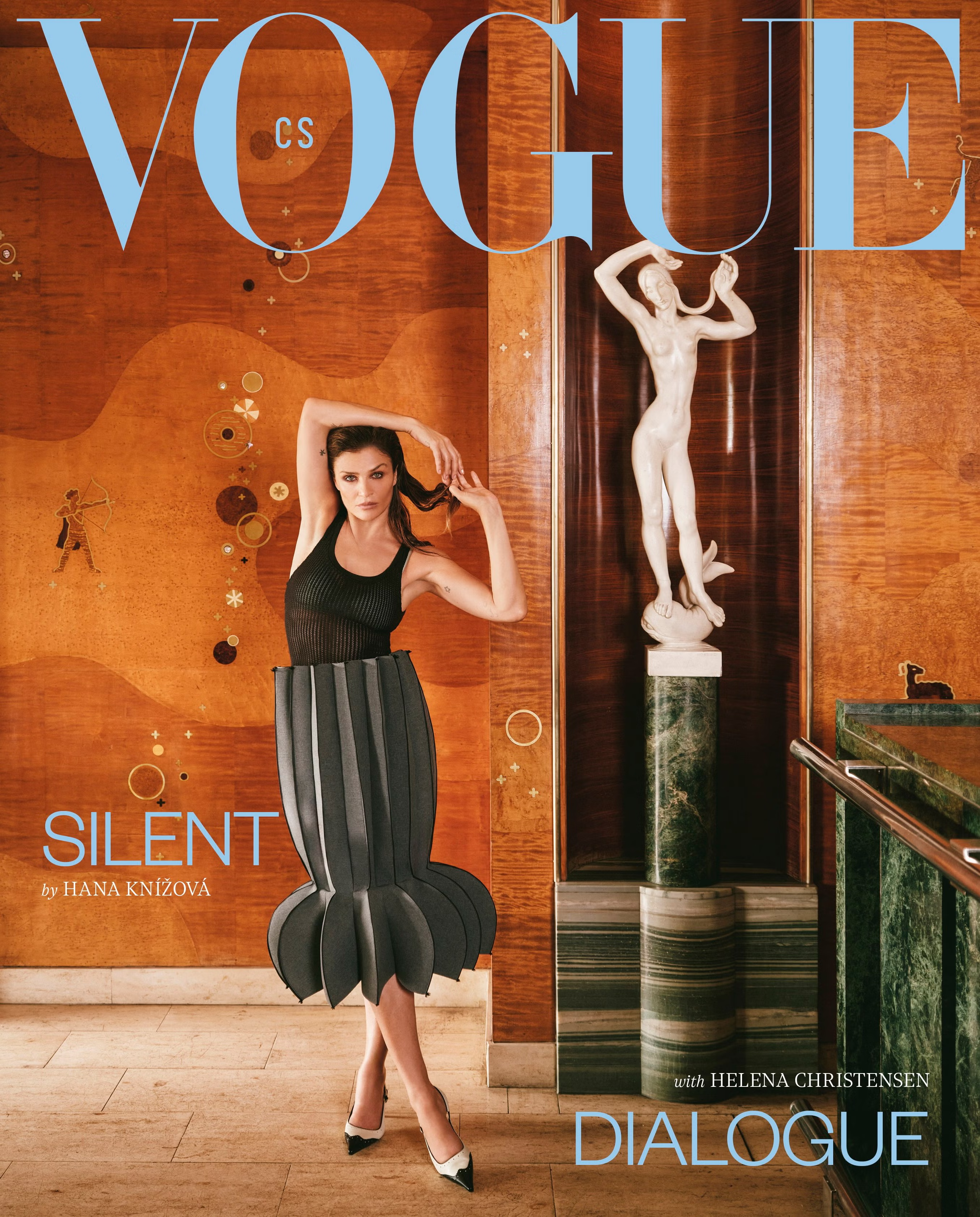
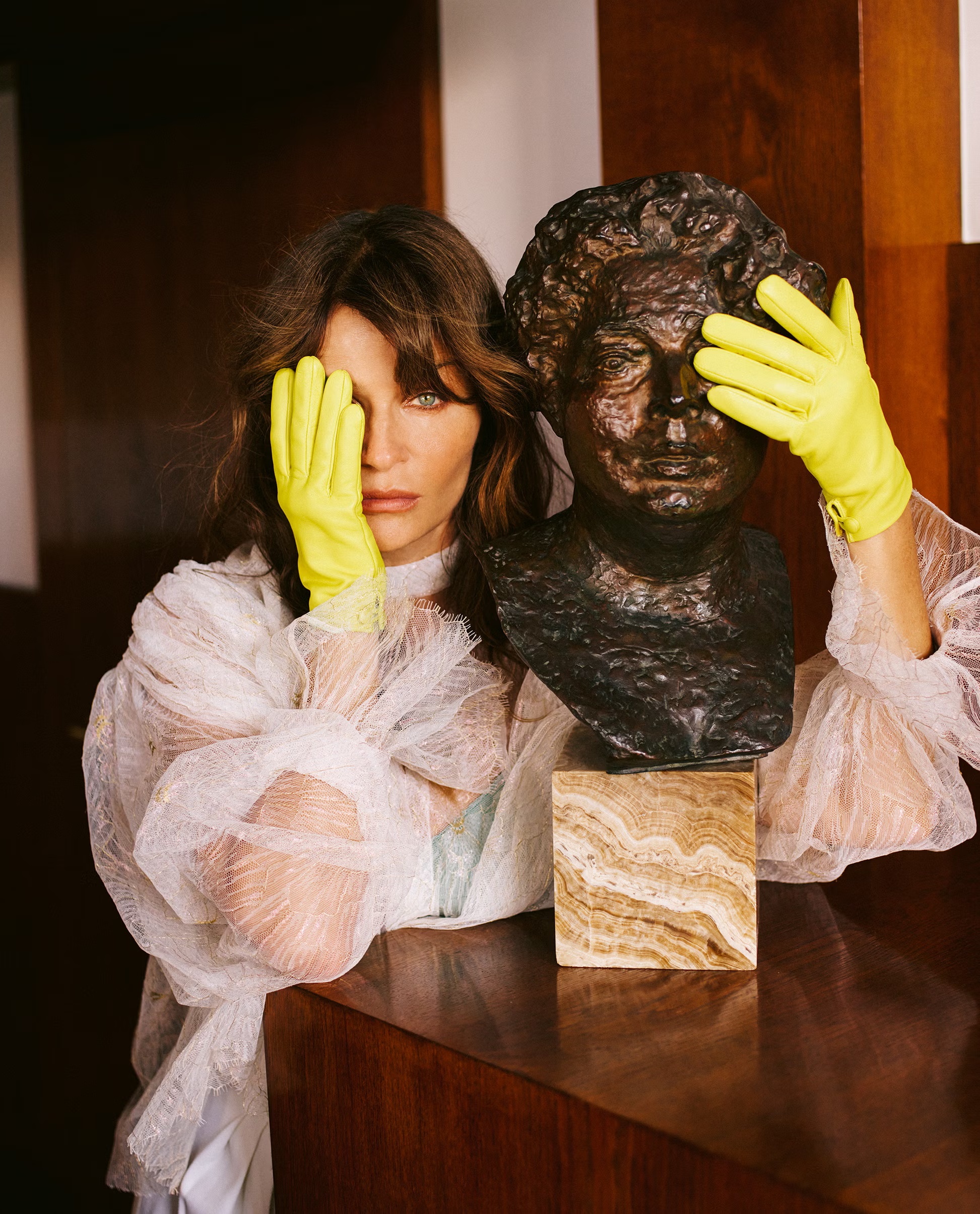
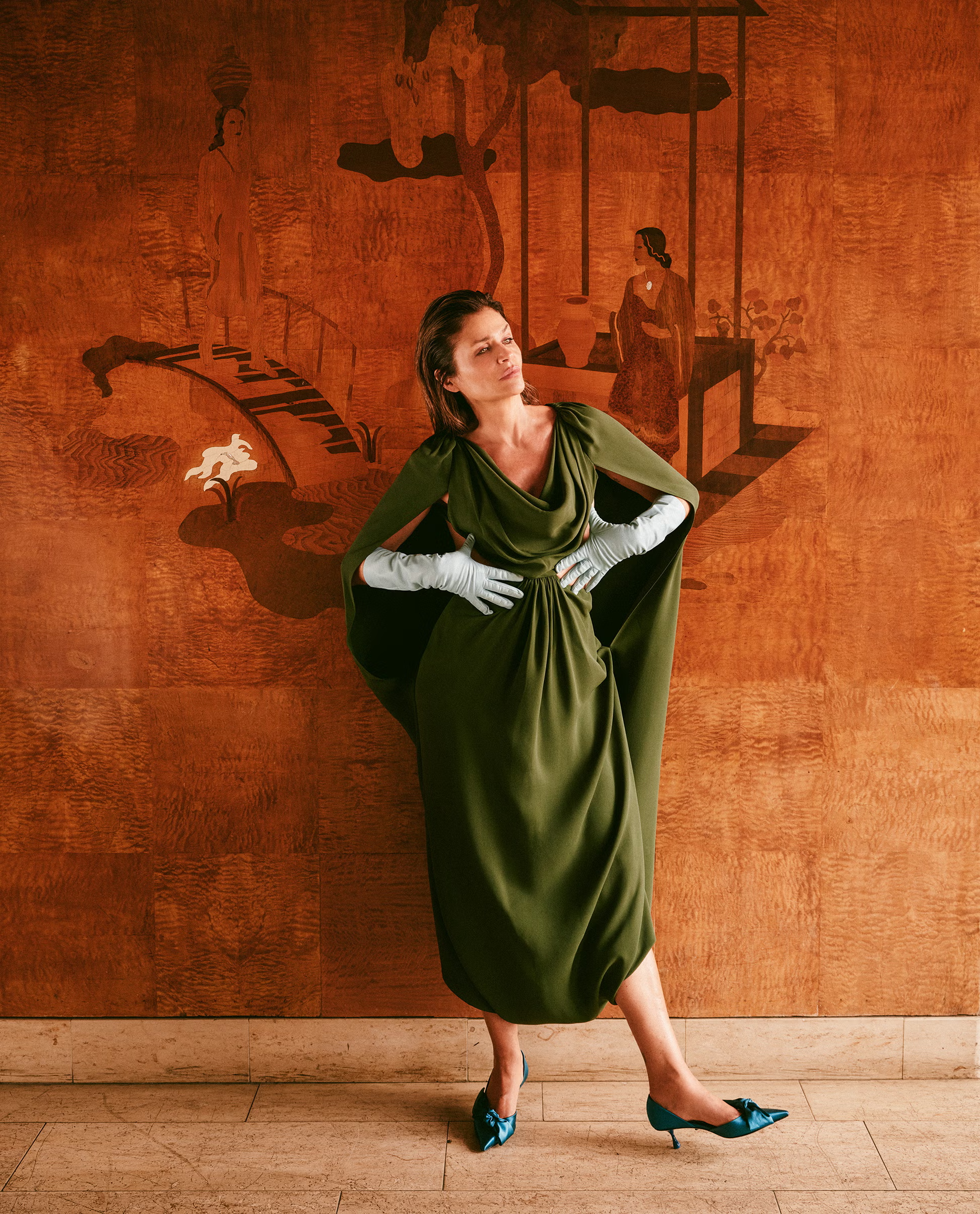
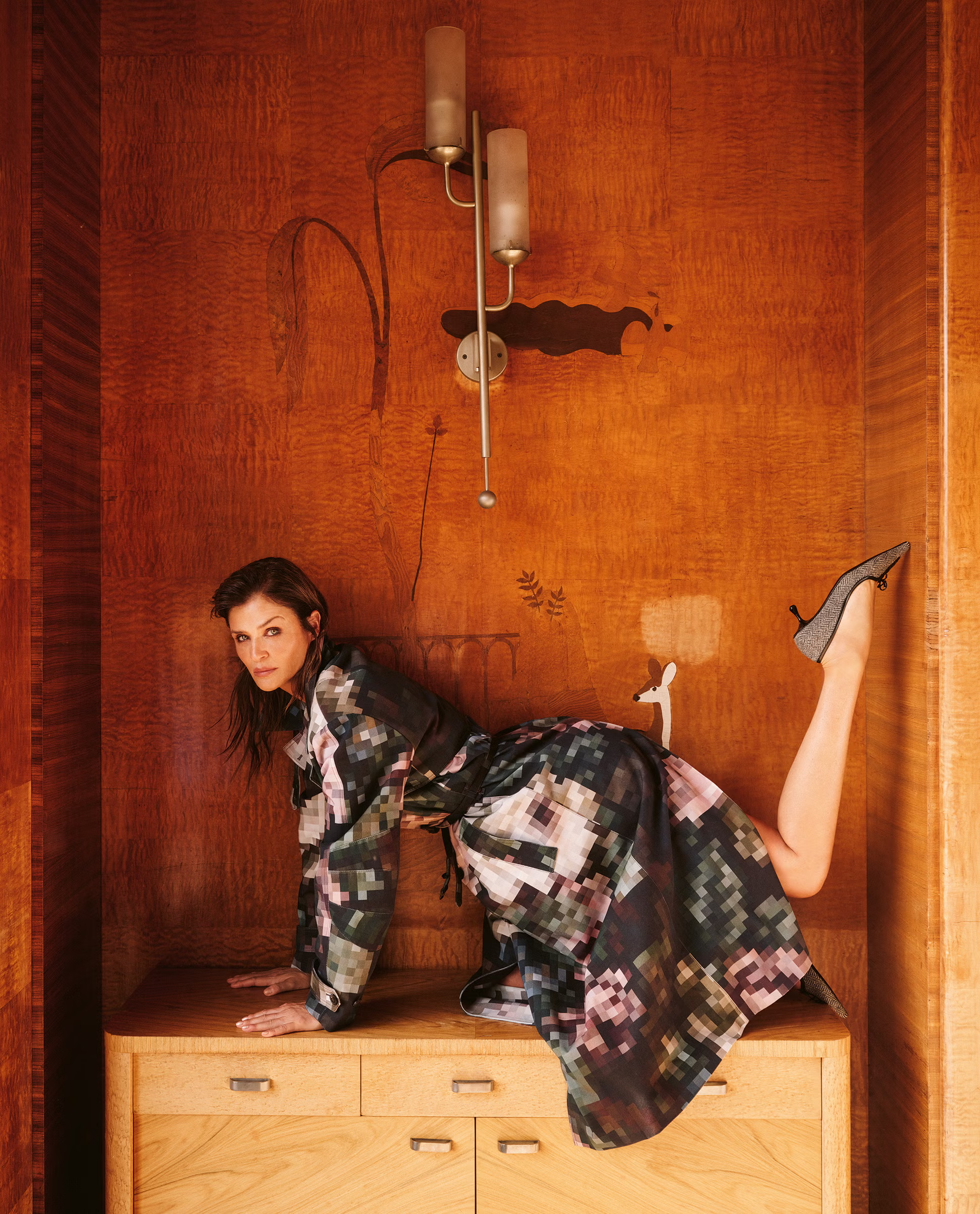
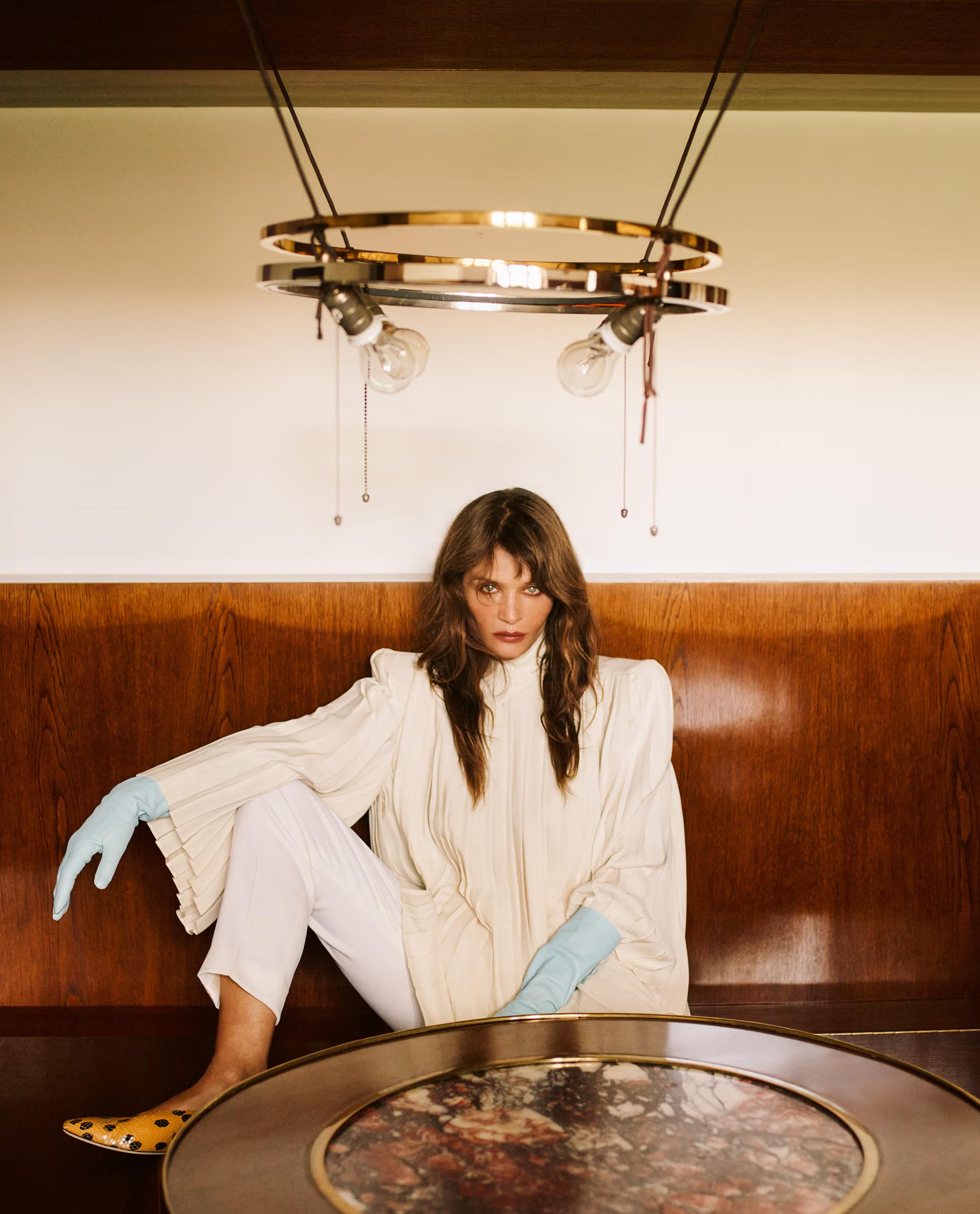
Let’s talk about your cover story shoot. I absolutely loved it – it felt so intimate. This story was photographed inside Adolf Loos’s apartment, a place with such a distinct atmosphere and history, and such a strong architectural identity. Did the space influence the way you moved, observed, or even approached the camera?
Absolutely! Always. I’m always begging to shoot on location rather than in a studio.
Foto: Hana Knížová
Helena Christensen
Foto: Hana Knížová
Helena Christensen
As a model as well, I definitely agree. (Both laugh.)
You can do very beautiful studio work, but honestly, it requires a certain kind of photographer and model. In the studio, you’re very restricted, and the photographer needs to create great lighting. For me, natural light is always the most interesting part of a shoot. But in the studio, there’s just this background where nothing happens, and all the responsibility kind of falls on the model and the photographer to create something interesting. If you’re on location as a model, you get really inspired by what surrounds you. You can play and create a little story, as I did in Adolf Loos’s apartment, because I’m obsessed with interiors and architecture. I’m a really big fan of Art Deco, Art Nouveau, Brutalism, everything you find in Eastern European countries. So, for me, it was literally a huge dream to be in that apartment. When you sit on the furniture and move around in that space, your mood changes, and it shows in your face and in your eyes.
Some places seem to absorb the lives of everyone who has passed through them. Did this apartment feel like one of those places, and what kind of feeling did you have there?
I had so many feelings. I just walked around, looking at every little centimetre of the apartment, touching every piece of furniture and looking at every piece of art. I imagined Mr Loos working on the different pieces, putting everything together. I tried to find and feel the spirit of the place. Everything, to me, was just such a dream. I like nothing better than entering someone’s apartment, and this happened to be the apartment of someone I admire so much.
And what do you feel in Prague? How do you like the city?
I love Prague. I’ve been there quite a few times. I even stayed there for several months when my son was little because his dad was filming a movie there. I would walk up and down the streets, play in the playgrounds, eat in different restaurants, and this time it was even better. There are so many amazing cafés and restaurants, and if you walk a little away from the tourist streets, you become part of the city’s history, and you can really feel and sense all the spirits, all the souls, and the history. That’s one of my favourite things to do. And the people there – they’re so cool and beautiful.
You Danish are pretty cool too.
Yes, you’re right, we are cool.
It’s lovely you mentioned your son because my next question is about your relationship with motherhood, because it’s also such a beautiful part of this story. Has becoming a mother yourself changed the way you understand your own relationship with your mother?
Yes, of course. Because you end up repeating everything your parents did, especially your mother. My dad was very cool and sweet, so kind and lovely, but my mother is sort of the driving force still. She’s right here with me now. We’re in the north of Denmark: my mom, my son and his girlfriend, and my dog. And it’s so nice to see how close we are and how my relationship with my mom has absolutely been passed on to my son and the relationship he has with her. It’s a very special connection. I think you learn so much from being a parent, and you learn so much from your child as well. You grow in many different ways, and you expand your horizons.
Foto: Hana Knížová
Helena Christensen
Foto: Hana Knížová
Mother of Helena Christensen
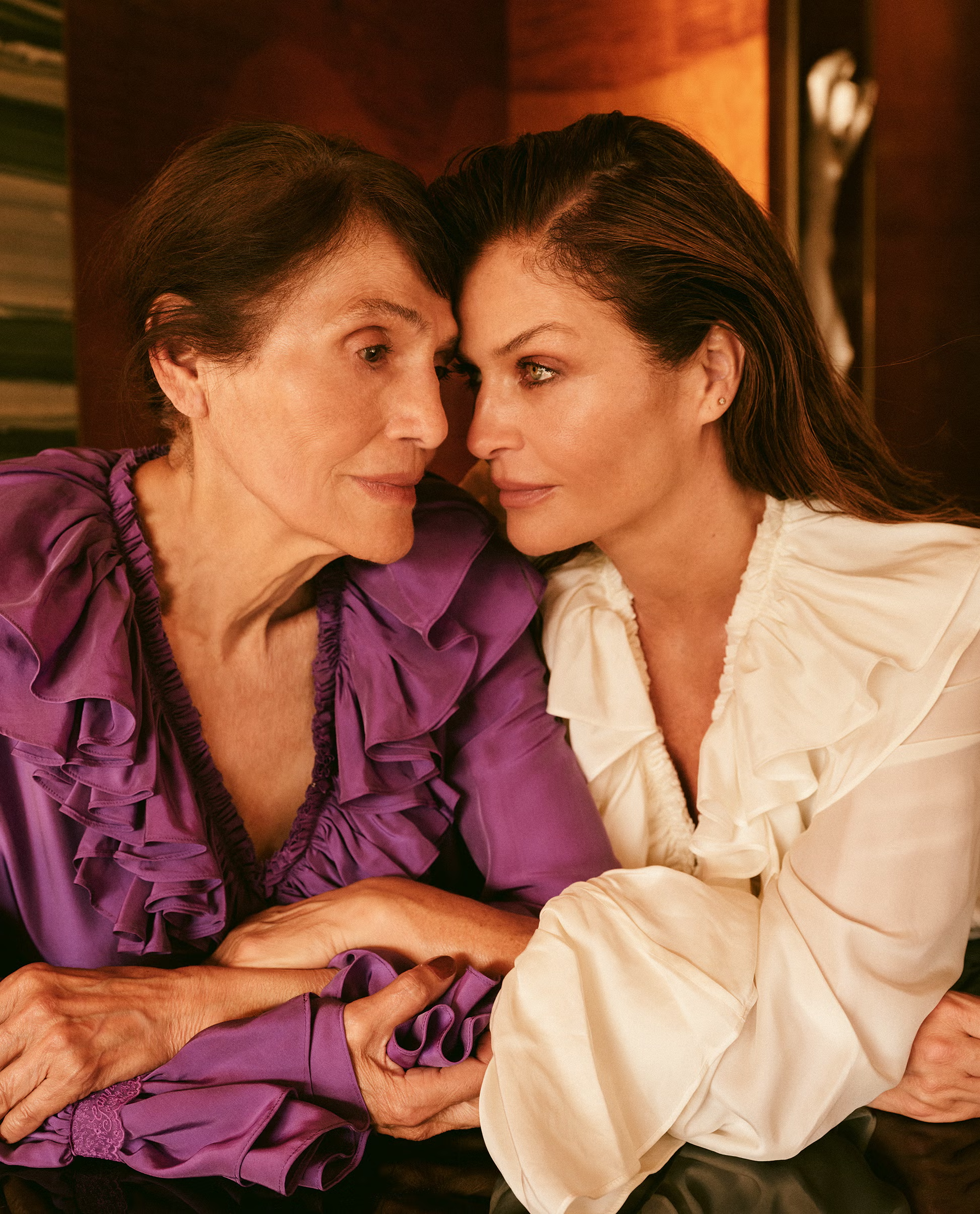
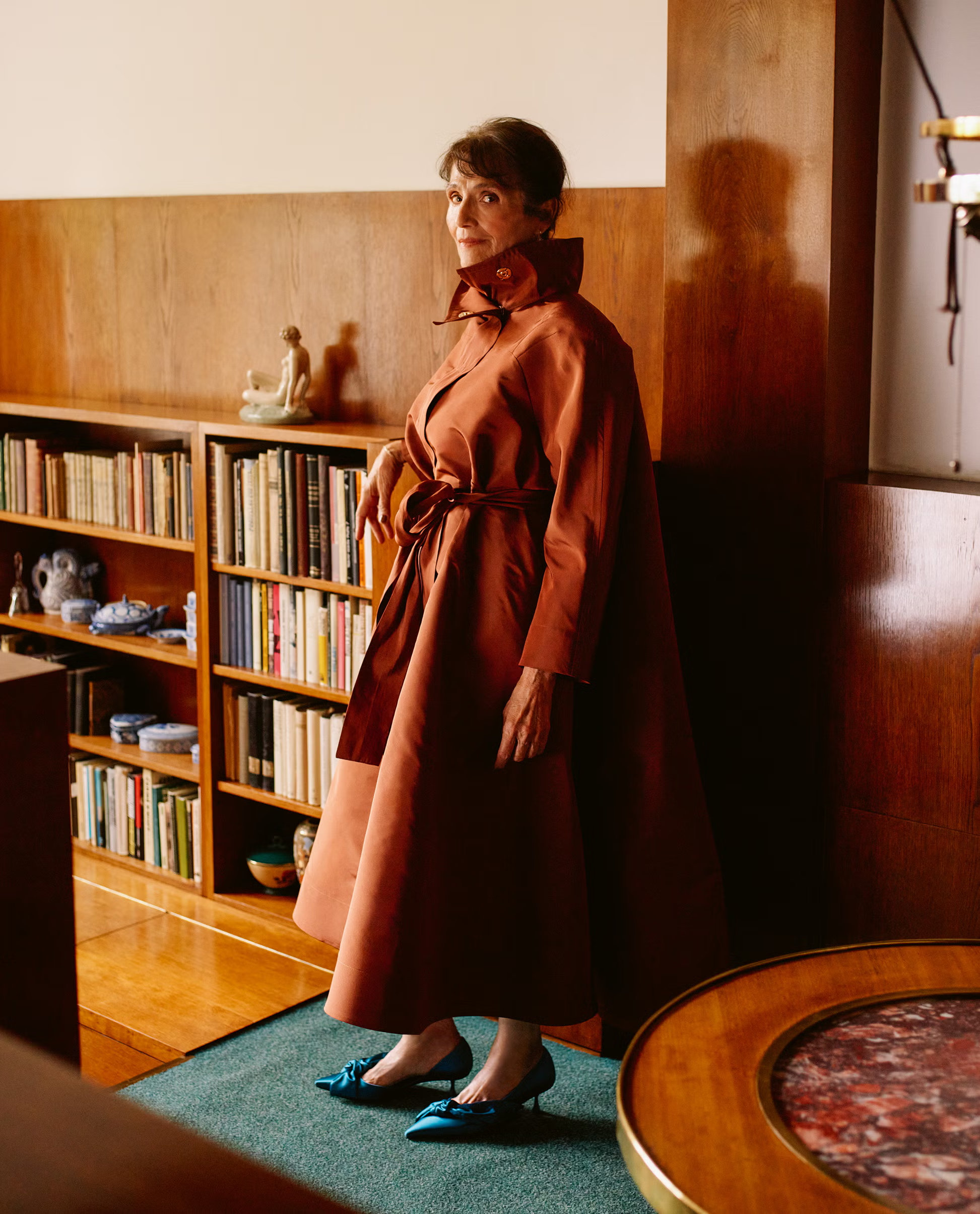
One of the most moving images in this story is the portrait you share with your mother. What did creating that picture together mean to you?
I think it’s incredibly cool, fun and sweet. The photo is very tender. It captures the incredible love between a mother and her daughter. Besides that, it was also fun to go on a trip and bring my mom. She was asked to be part of the story, and it was so sweet to see her get her hair and make-up done, how cool she looked in the outfits, and how beautifully she posed.
She knew your face long before the rest of the world did. Does she still see something in you that no photographer ever could?
I can imagine she does. Your mother knows your face, as you said, from the moment you’re in her womb, even before she actually sees it. It’s a very special lifelong bond, and one of the most beautiful love stories is between a mother and her children. And fathers too, of course, but because women are so magical, and we’re able to carry and create the miracle of a child, it makes me feel so grateful to be a woman, for that reason alone.
I’m in my seventh month of pregnancy, carrying a baby inside me, so I’m in tears right now as you’re talking.
Oh, that’s so lovely. You’ll get the best ride of your life. It gets hard sometimes, but all the benefits are so much greater, so you’ll really have fun.
Foto: Hana Knížová
Helena Christensen
Thank you. It’s a huge change. I didn’t plan to ask and talk about this, but if you don’t mind telling me, how was your pregnancy? What would you say to a young model or anyone who wants to have a baby but is maybe afraid of losing their career, or of the changes to their body and life?
I never once thought about my body in terms of work, not before pregnancy, not during it, and not after it. For me, it was simply a question of: okay, if people can use and work with who I am and what I have, that’s very cool and we can create interesting stuff together. If that hadn’t been the case, I wouldn’t have stayed in this job for a single minute. When I got pregnant, I never thought, “What if I get too big?” It never even crossed my mind. It was so much more interesting to think, “Oh, there is a human being inside me, a little tiny alien growing.” It wouldn’t make sense if you didn’t grow as well; it would be very odd. And it also wouldn’t make sense if, the minute you gave birth to that human being, your body immediately recovered. That would be weird too. So for me, this is simply the way it’s supposed to be. It’s very natural. And I never put any pressure or stress on myself, because it didn’t seem right or realistic. Of course, you’re going to grow, and of course it takes a long time afterwards. And you deserve that time. Nothing was ever important enough to me that I would’ve had to change my body or stress over anything. We go through different kinds of body and life fluctuations. I literally laugh at it. I really want to go through life without stressing about changes to my body.
Thank you for your courage in saying all these words, Helena.
Because I get very nerdy sometimes, and it just doesn’t make sense practically, mathematically, or anatomically – it doesn’t make any sense at all if your body doesn’t change when you’re growing a baby. Everything in the end happens as it’s supposed to. Everything happens naturally and goes back to normal afterwards.
Yes, it’s incredible what our bodies are capable of during pregnancy, creating a new life. What was the last ordinary moment that made you want to pick up your camera?
I would say that we just took a long walk, my mom, my son, and I, and we were walking together. He was helping her when we got to a particularly difficult part of the hike, and it was just so sweet to see that. And I took a lot of pictures of them because I was walking ahead with the dog.
Foto: Hana Knížová
Helena Christensen
A very nice moment, especially with the family. After everything you’ve seen, what still makes you stop and instinctively reach for your camera?
That’s my problem, or maybe not a problem, but a gift. Because there’s so much every day that makes me stop and take photos. It’s unbelievable how much I get inspired by everything around me. I’m always curious about what’s happening right in front of me, or a little further away, or behind me, up or down. My head is moving all day, and I just keep taking photos, zooming in, shooting something far away, or capturing something close up. I’m a little pathetic, and I just cannot stop using the camera. It’s both an obsession and a gift.
It’s definitely a gift. How has your way of seeing the world changed over the years?
Of course, the world is changing all the time, but a lot of things go around in circles as well. I feel that human beings always end up looking for the same things, moments, places where they can find peace and feel safe. It’s a very primal thing that we’re all looking for, no matter how the world changes around us. I’m very inspired by old times, ancient history, architecture and design, oh, and old clothes as well – eighty per cent of my wardrobe is vintage and second-hand. So I think I’ve always kept one foot very much in the past. That’s maybe why I don’t see the world changing as much, because half of me is rooted in something very historical and old. Hardly anything in my home is new. I live in that way, and for me it’s really important to stay in that mood or vibe.
Speaking of old and new, is there anything you hope never becomes ordinary to you?
I don’t really worry about that, because it hasn’t happened so far, so I don’t think it ever will. Nothing is ever going to become entirely ordinary to me. But even if something does, it doesn’t bother me, because I find beauty in the ordinary.
I think we can finish here. Thank you so much, Helena, for sharing such a beautiful reflection. I’m very excited to share your story with our readers. It was a real pleasure to have this conversation with you. Thank you again for being part of this issue.
Well, I’ve got to say that, for some reason, interviews with Europeans, and particularly people from Eastern European countries, are always the most interesting because the questions are so profound and unique. You don’t get the usual questions that are asked by so many other journalists. It’s always different, and it makes you more excited to share and be more personal, so thank you for that.
Vogue
Doporučuje
Přehlídky
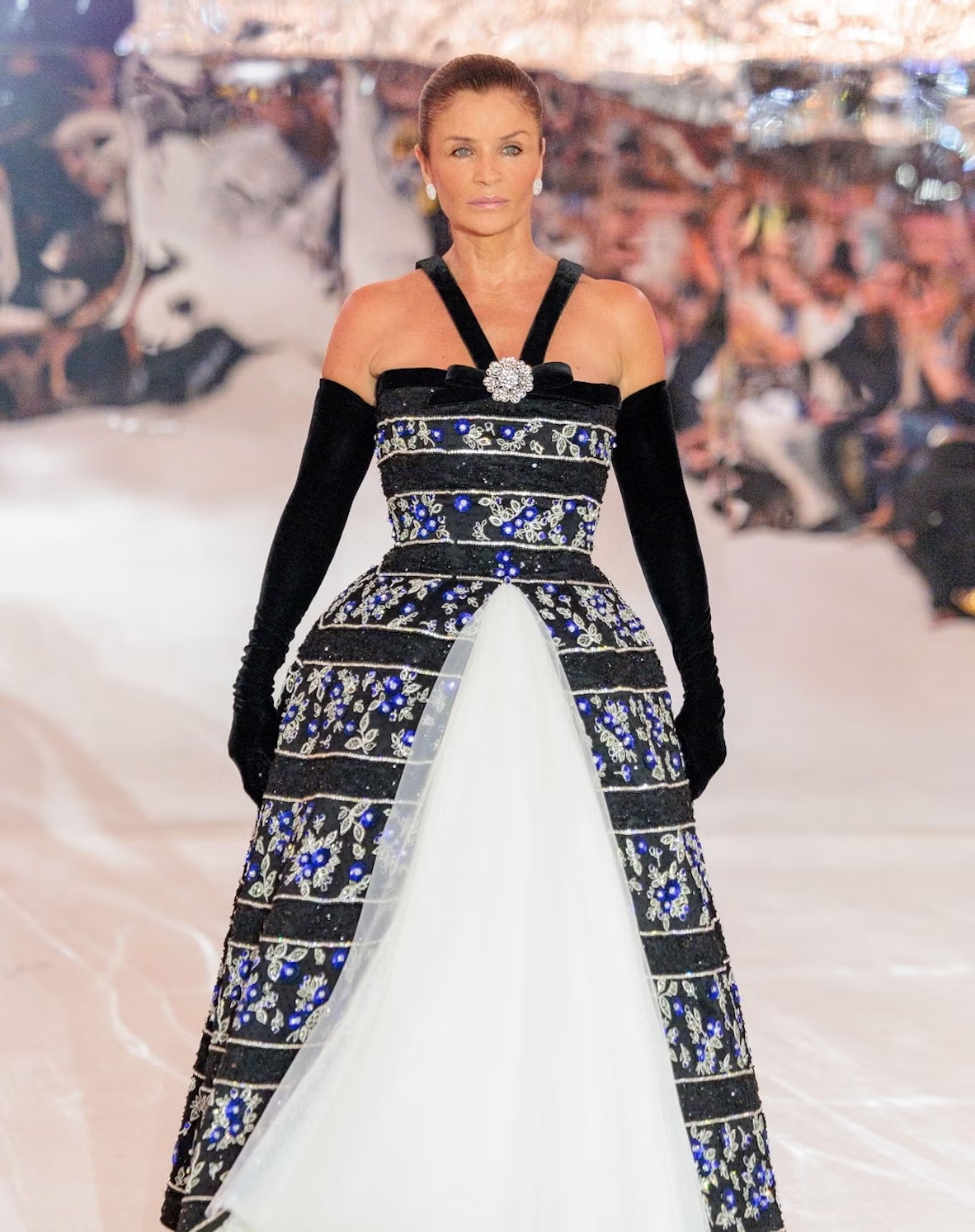
Helena Christensen se vrátila na molo. Richard Quinn jí svěřil finále přehlídky
IVA VUKOVIĆ21. 9. 2026
Společnost
Dove Cameron a Damiano David exkluzivně nejen o svatbě: Děláme vše pro to, aby náš vztah byl úplně normální
Chiara Barzini17. 9. 2026
Vogue CS in English