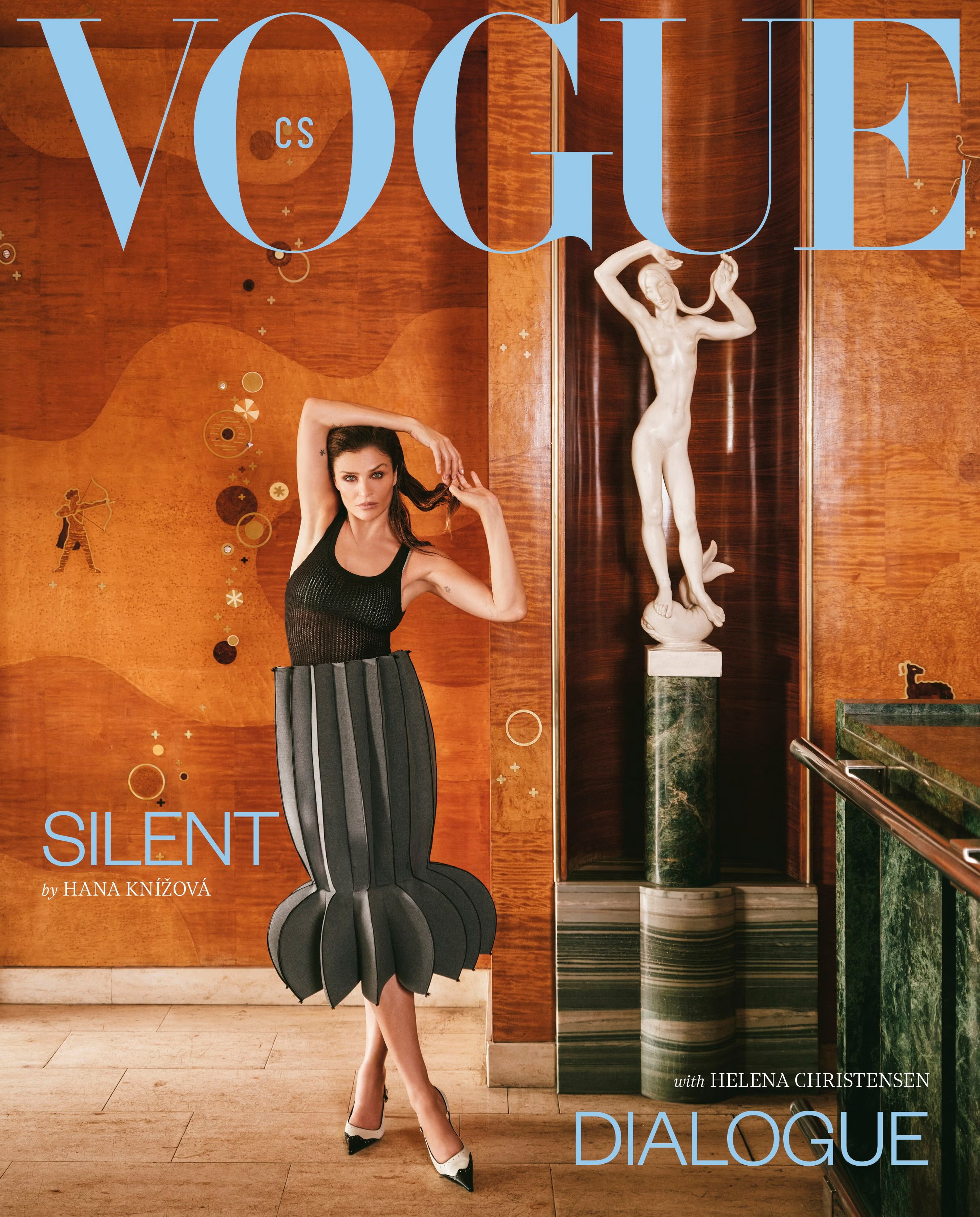
Vogue CS in English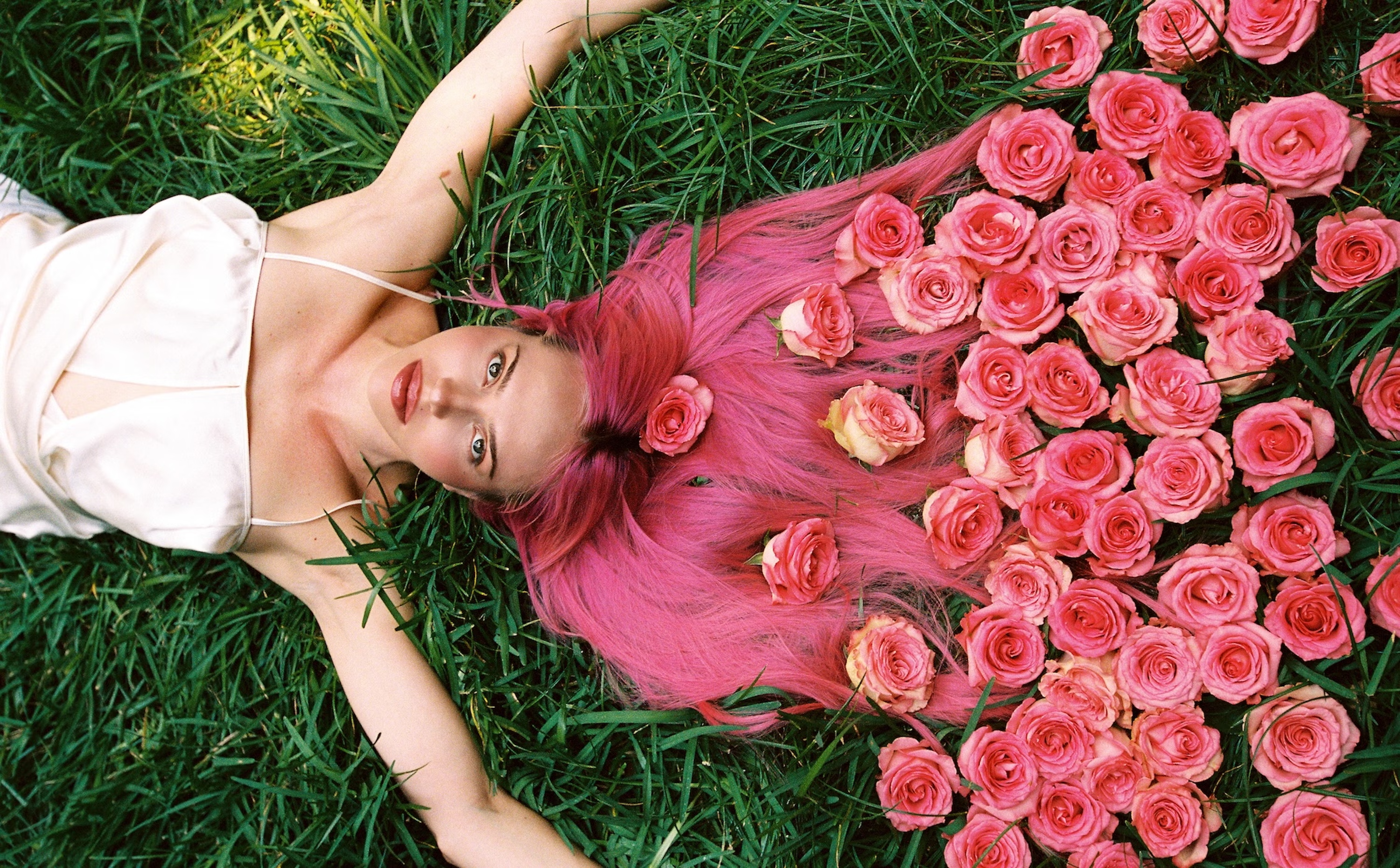
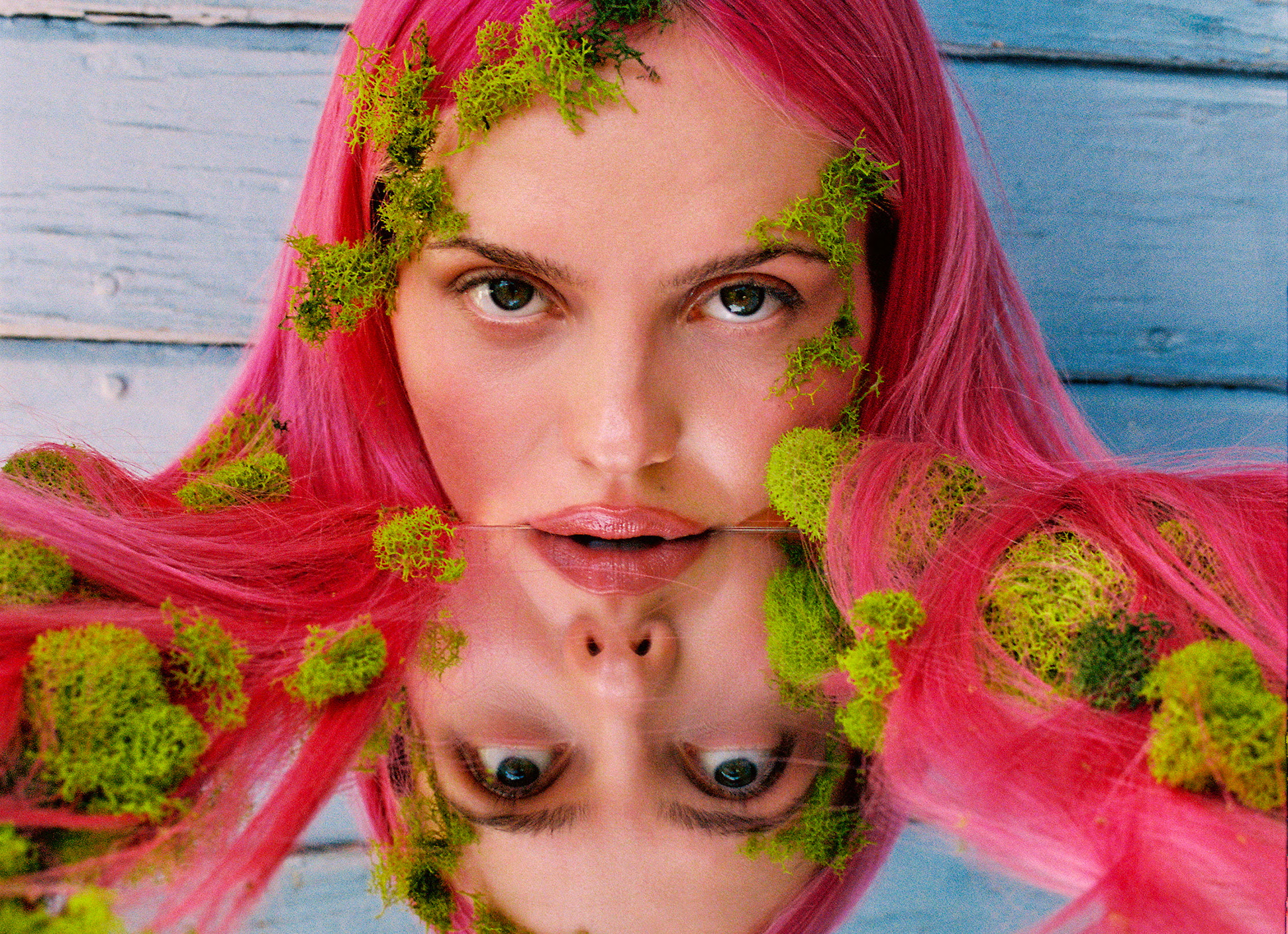
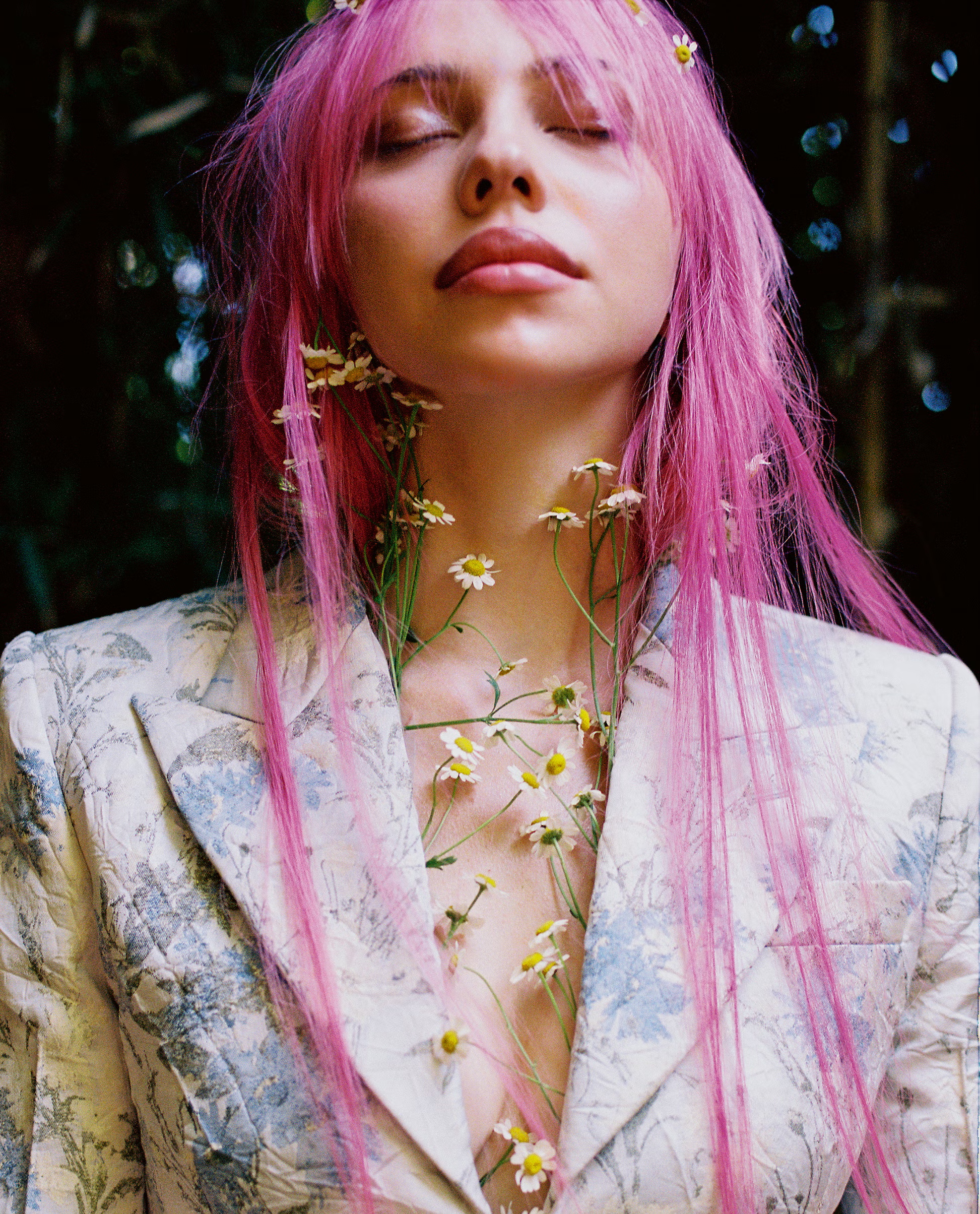
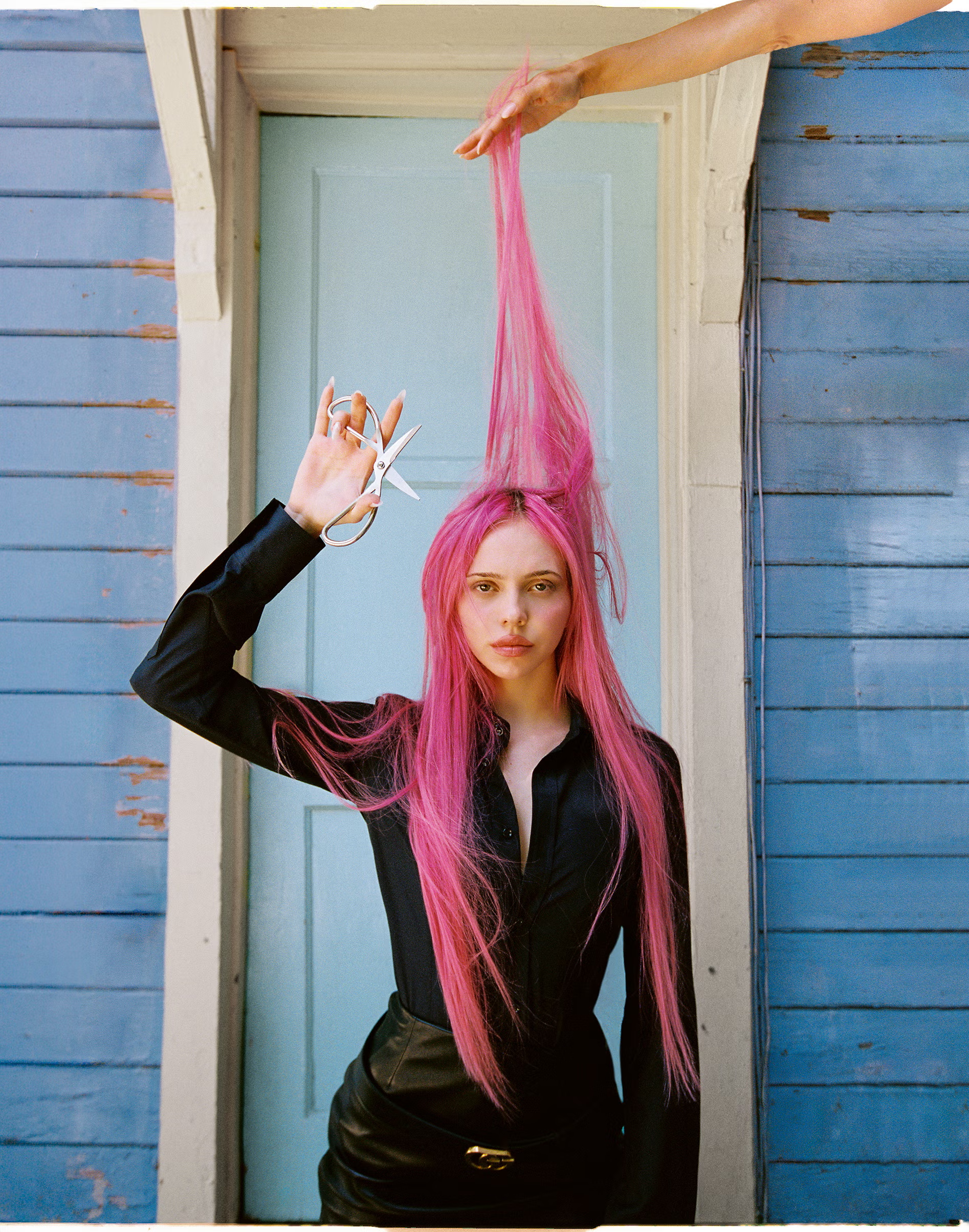
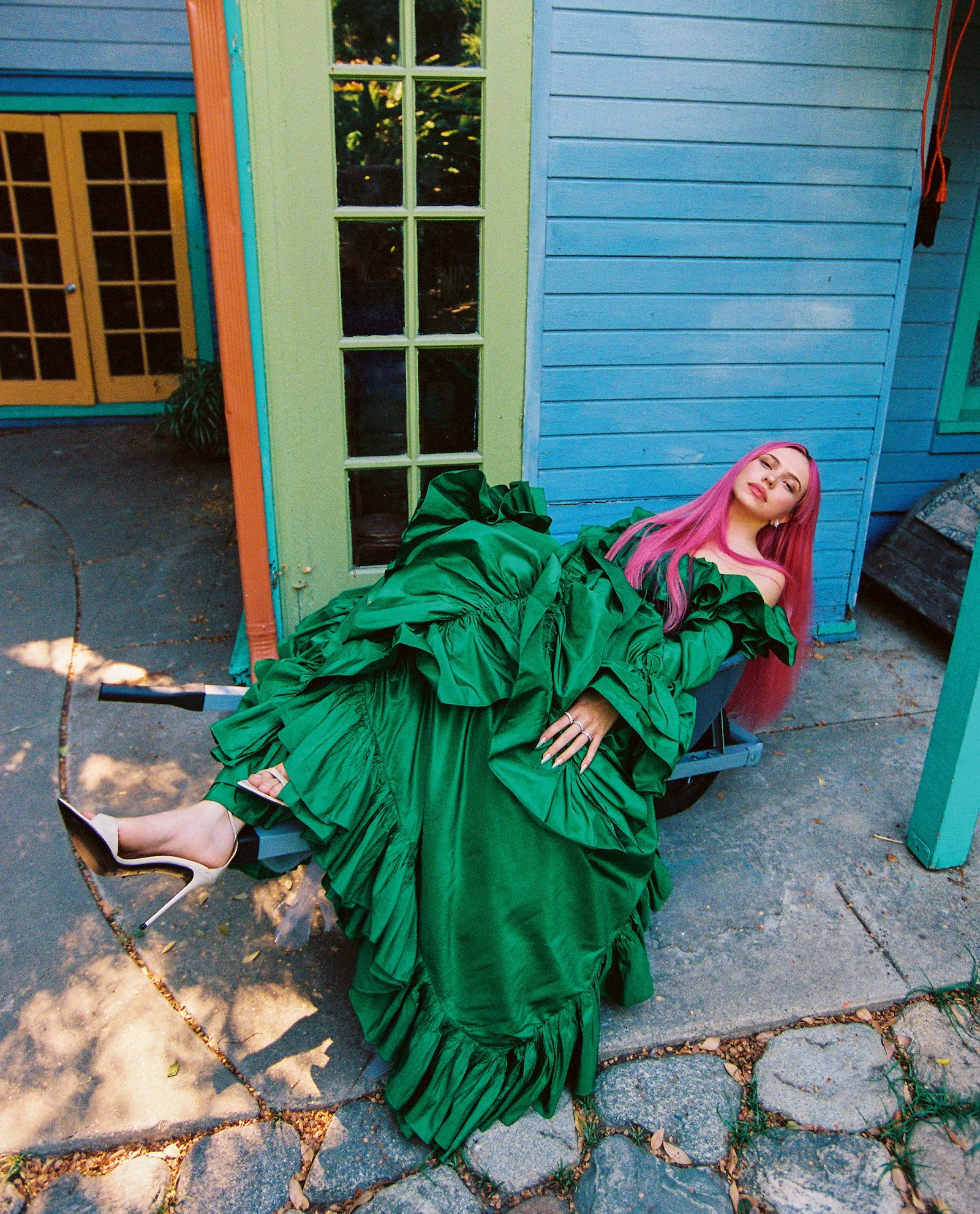
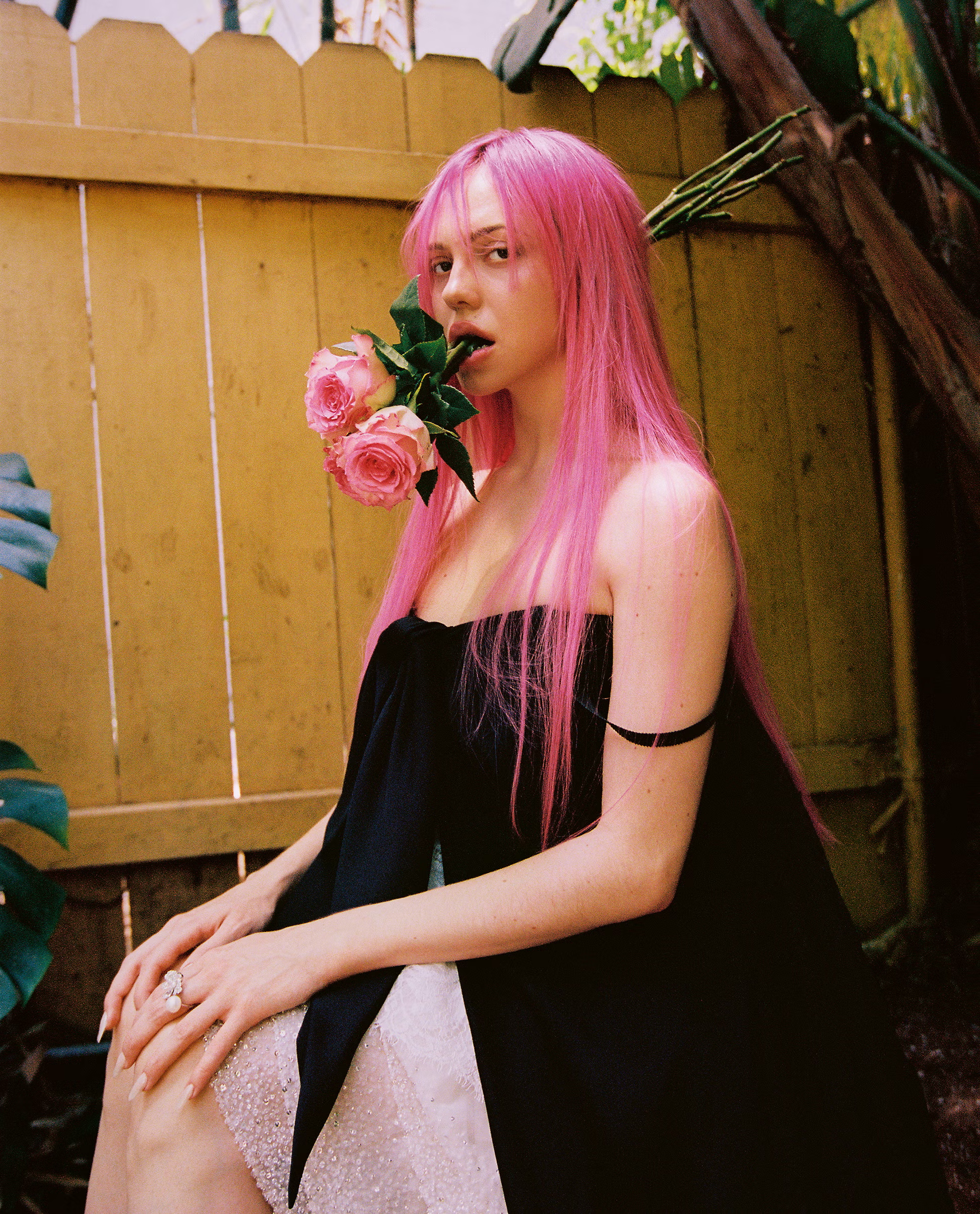
The baddest bitches ain't in LA, they're in Vogue. Cover star of the September Issue, Adéla, by Michal Pudelka
Tereza Patočková24. 8. 2026
From Petržalka to West Hollywood. Exactly one year after her first interview and photoshoot, Adéla Jergová, known simply as Adéla, returns to the pages of Vogue CS as the cover star of our September Issue.
Foto: Michal Pudelka
Adéla
She didn't end up in the American music industry by accident. Adéla knew what she wanted from a young age, and failure never stopped her. Ballet discipline and hard work eventually led her to millions of streams, a major label, and a career in Los Angeles. Still, she says that the real challenge lies not in reaching the top, but in staying true to yourself along the way. In the interview, she talks about how she protects her identity in an environment that pushes people to conform, why the internet creates more pressure on women's appearance than Hollywood itself, and what it feels like to return from LA to homophobic Slovakia.
It's been exactly a year since your first interview with Vogue CS. What’s changed since then?
I released an EP, supported Demi Lovato on her tour, played some concerts of my own, went to a few fashion weeks, and announced my own tour, which will take place in America and then in Europe. I also played at Lollapalooza. And now, exactly a year after my EP, my first album, Prima, is coming out, which I've written in the meantime. Quite a lot has happened.
That's a lot of work. What are your ideal conditions for writing music?
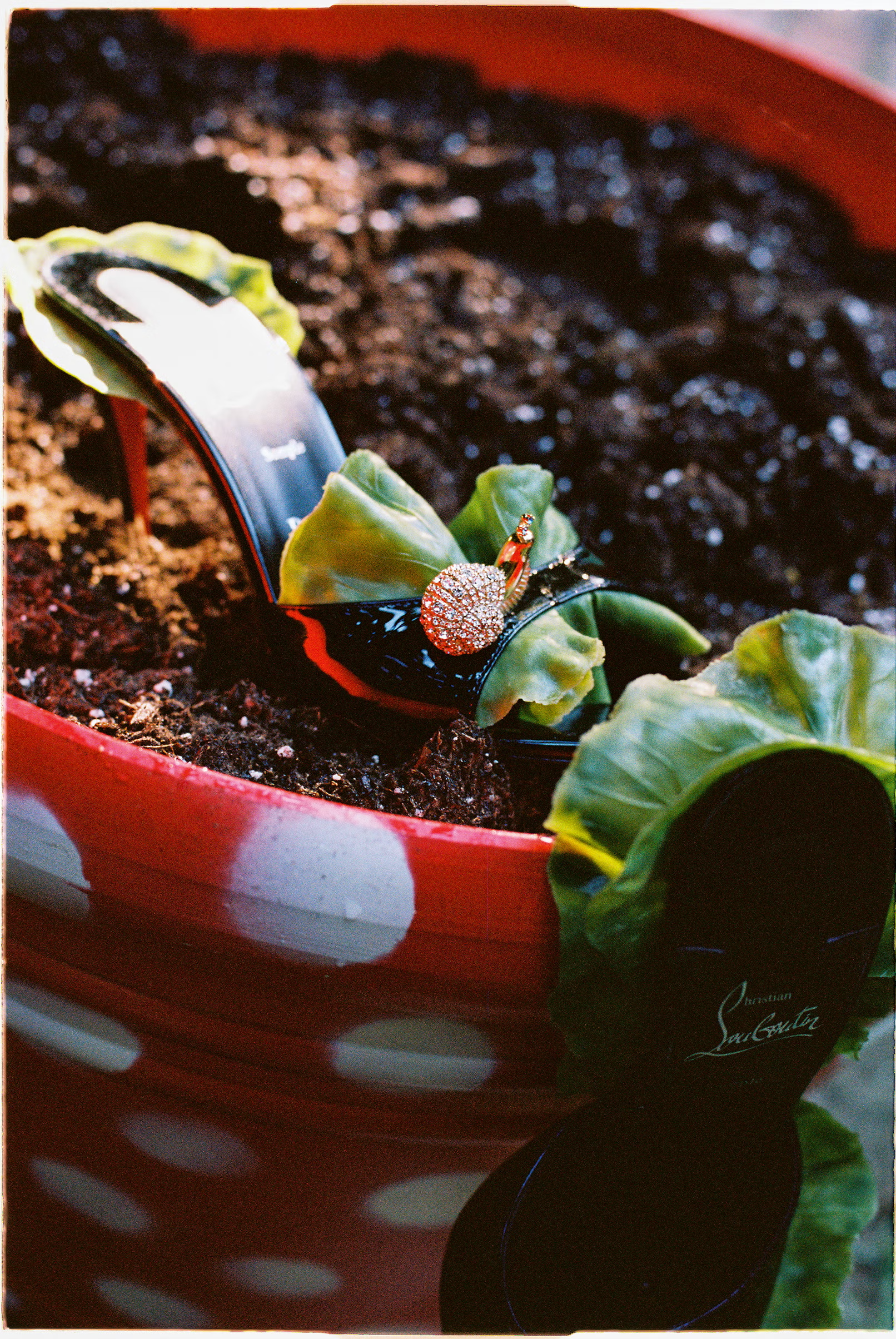
When I have some time for myself and can really be completely alone, away from everyone and everything. It doesn’t have to be a long break; I just need a day to myself to think and reflect. At the same time, I need to experience those moments between writing and the studio, when life simply happens, and those experiences then find their way into my songs. For example, the song Red Bottoms came about when I looked at my worn-out shoe and said to myself, “I feel exactly like that.”
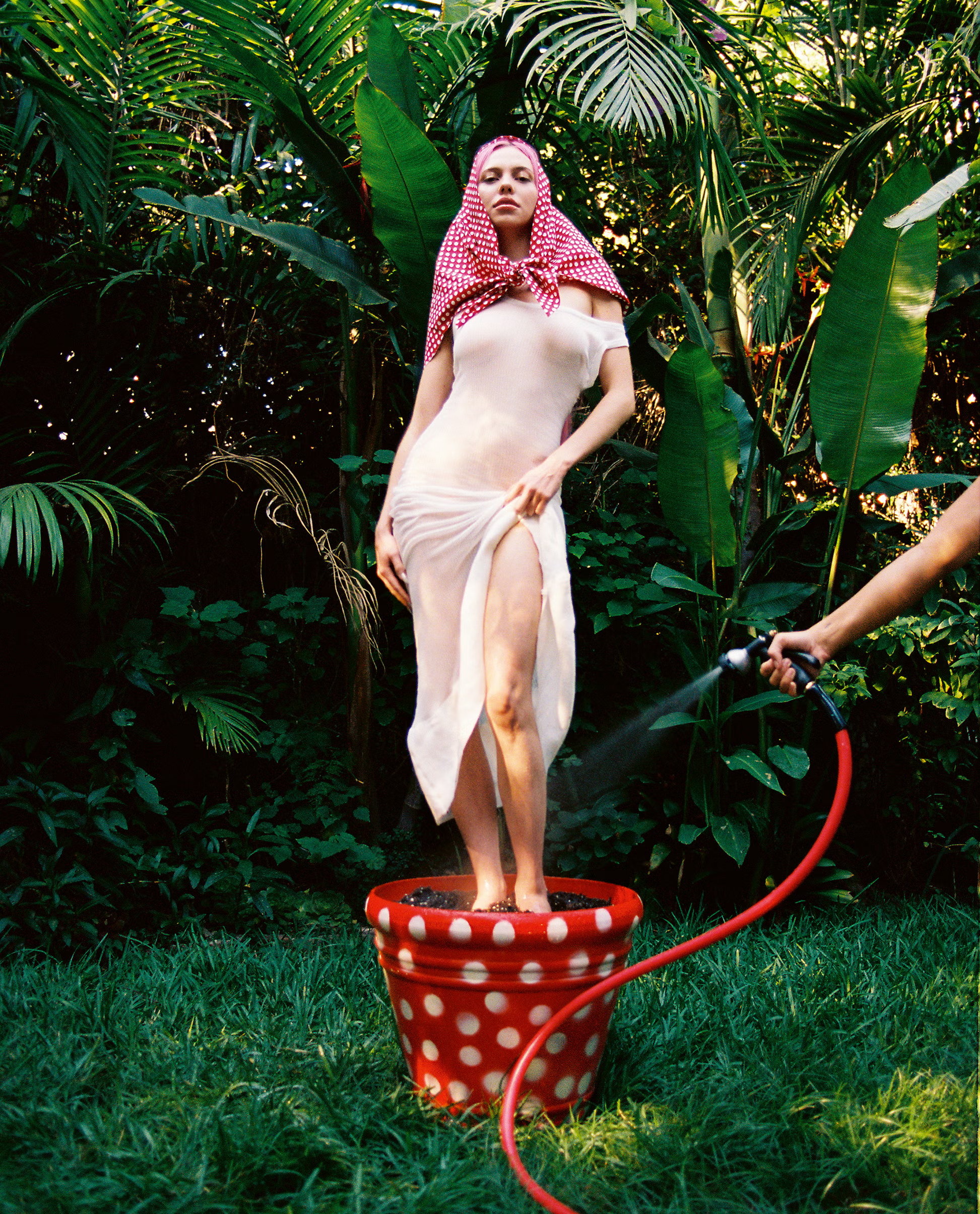
Foto: Michal Pudelka
Adéla
Foto: Michal Pudelka
Adéla
With all your projects and activities, do you have to plan these me-time moments ahead?
I have studio sessions scheduled because, even though my creativity comes when I'm alone, I don't like to write songs entirely by myself. I like having people around me to discuss my ideas, melodies, and memories. Blake Slatkin, my super-close collaborator, and Dylan Brady are always there with me. I’ve also written a lot of stuff with Julia Michaels and Billy Walsh.
What is Prima about?
I wanted it to be a little chaotic and to feel like something a 22-year-old girl would make. There was no grand plan behind it, no, “this has to be my life manifesto.” I am my own manifesto. So, I just wanted the album to be everything: deep thoughts, really stupid thoughts, but also horny thoughts. It's all part of being human and being a woman. I also wanted it to be the kind of album the girls from Spring Breakers would listen to, something that would dazzle my 12-year-old self and make her think, “Wow, that's THE pop star.”
On the album, there’s a song called KGB, about which you said: “Just because I don't use big words doesn't mean I don't have anything to say. Google what KGB means and wait for the whole song.”
Foto: Michal Pudelka
Adéla
What did you mean by that?
Everything I say in the song is meant literally, and I think that's why some people were irritated. They wanted some metaphor. I wanted the song to be a little funny, but also to be about what the KGB really was. At the same time, I added a disclaimer at the end of the video saying that I stand with Ukraine and do not support the KGB. And guess what – people got a history lesson along with the song, too. Because a lot of Americans really don't know what the KGB was.
How does the process of choosing songs to make the album look? Do you write a lot and then pick the best ones, or do you just keep grinding one until it's great?
We definitely write a lot of songs, and we've definitely made a lot of bad songs. But that's the only way to get to something worthwhile.
How do you deal with creative crises? Do you ever experience them?
I'll be honest, I haven't yet. Of course, there are moments when I'm not that inspired. I'll come into the studio, and I don't have anything to say, but you can talk about that and use it as content for the lyrics, even if it turns into a bad song. On those days, it's important to push through. You have to write and write until you finally get out of it. In art, the best things often come from negative circumstances. For example, one of the tracks on Prima is kind of an experimental piece. It's not even a song. It's basically just my frustration and sadness on a loop. I thought it was cool to put it on the album because it's real.
Foto: Michal Pudelka
Adéla
Is the theme of being real and authentic a big part of LA? There's a whole scene about it in Rachel Sennott's show I Love LA, which satirizes showbiz life in Los Angeles.
I love the show, and a special shout-out to Rachel Sennott, who gave my debut album its name and was with me the whole time I was working on it. Of course, I Love LA is a very exaggerated show, but there's a lot of truth in it. And the theme of authenticity in the entertainment industry is a really big thing in LA. A lot of people here are just born into show business, and then it's really hard to grow up around other talented people and succeed in what you want to do. It actually takes away a little bit of your freedom to be yourself, because it shapes you. People who grow up here and in the entertainment industry are really concerned about what other people think of them. It stifles their creativity. I feel like they don't really know who they are because they spend their whole lives trying to be who they think they're supposed to be. When you're here, and you grow up around musicians who understand that, you take their opinions so seriously that you get lost in them.
Foto: Michal Pudelka
Adéla
And you don't experience that?
I'm not from here, which is an advantage. When you come from a place that's not based on show business, you really have to believe in yourself. You have to believe that what you want to say has value and deserves to be heard. For example, when my mom told me that she didn't like something I wrote, I would say: “Mom, you don't know what you're talking about.” Just a classic teenage girl, plus she really didn't understand it. She's not a musician, and no one in my family is, so I had the freedom to gradually develop my own taste and my own style. Then, when I came to Los Angeles, I had both of those things deeply rooted in me. It was the only way and the only reason I was able to build enough faith in myself.
You say that you are very Americanized, but do you still feel like a foreigner because of your Eastern European origin?
There are definitely parts of my personality that are very foreign here. For example, we Slovaks are direct and don't beat around the bush. Sometimes people here aren’t ready for that. Everyone here loves to do something I call “worming,” which means that they keep circling around what they actually want to say. They say a million different things before they finally get to the point. Slovaks are completely different in this respect; they just say it right away. I think it's a cultural difference. We don't have the time or patience for all this dancing around the subject.
Foto: Michal Pudelka
Adéla
Last year, in an interview for Vogue CS, you said that you’re very free and that you do and say whatever you want. Even in the series I Love LA, you could see that one wrong word or a politically charged comment is enough to lose jobs, and the show-business world will turn away from you.
I don't think you can hide who you really are for long. That's why I'm totally fine with being open and saying what I think and what I feel, because I know I'm a good person. I care about people. I care about how I treat them. And I just don't think I'd get in trouble for it, because everything I believe in comes from love and kindness and simply being human.
I feel that in the song Ain't in LA you're distancing yourself from this city a little bit. Is that right?
In this song, LA works more as a symbol for “something bigger.” I definitely love Los Angeles, but there are a lot of songs that celebrate celebrity culture, and I was a little sick of it. So Ain't in LA is for everyone, and LA is a metaphor for the fact that you don't have to be from a big city to be a bad bitch. That's all.
Foto: Michal Pudelka
Adéla
LA is also a center for plastic and aesthetic surgery, which is exacerbated by the presence of celebrities. Do you feel any pressure in this regard?
I don't think it comes from people in real life that I see on the street. It's more like it comes from social media. I don't really care that people around me have had plastic surgery. What bothers me is how terribly mean and disgusting people can be on the internet, especially towards women and their appearance. That's why women around me get plastic surgery, and I understand them. A lot of people write to me that I'm ugly. That's why I felt I had to change something about myself, and I did. About a year ago, I had my chin filled and I looked absolutely horrible. I really looked crazy for almost a year, but it was an experience for me. It's also because we're used to looking at each other all the time. We see our faces constantly, and that's a terrible mindfuck.
Many of your listeners are gay and queer people. Would you like to say something to your fans in Slovakia?
I hope that my music brings them joy, and that through it they feel seen. What's happening in Slovakia, where the country is heading politically, is a terrible disappointment, and I'm really sorry. I don't even know what else to say about it, except that next time we have to vote for a better future for Slovakia, and we have to fight for it. I live in West Hollywood, where we have one of the biggest Prides in the world. Then I come home to shoot a video in a gay club I used to walk past on my way to singing lessons as a kid. And for the first time, I realized that it's no coincidence that it's hidden in a basement, tucked away in a small alley. It was a very strange feeling. I hope my music will bring at least some positive emotions to queer people in Slovakia and that it will give them a little light in dark times.
The September Issue of Vogue CS is now on stands.
Vogue
Doporučuje
Hudba
Kim Petras v exkluzivním rozhovoru o albu Detour Rare N'Deluxe, vintage módě a touze být svá
Alberto Calabrese6. 10. 2026
Hudba
Angèle představuje nový milostný trojúhelník. Spojila síly s Caroline Polachek a SebastiAnem
Lolita Mang1. 10. 2026
Hudba