Vogue CS in English
Turning an Authentic Brand into a Global Business
tým VOGUE30. 9. 2026
Talent alone is not enough to build a global fashion brand. That is why Vanderbilt & Seewald Global Studio was created: to connect talented independent designers with business, capital, media, technology and the people who can take their work to the world. In conversation with each other, founders Consuelo Vanderbilt Costin and Michaela Seewald reveal how this model works in practice – and what it really means to grow without losing the identity that made a brand distinctive in the first place.
Foto: Jakub Gulyás
Consuelo, when we first started talking about Vanderbilt & Seewald Global Studio, we both felt there was something missing in fashion. Where did you see that gap?
For me, it was the space between talent and opportunity. And that gap is enormous, and very few people know how to bridge it. Almost no one, in fact. A fraction of a fraction of a percent of creatives manage to do it. Yet at some point, it is absolutely vital for talent to become commercially viable.
I experienced this firsthand in my own career. I started out as an artist and later became an entrepreneur because I saw how difficult it can be for talented creative people to navigate the business surrounding their work. There is no shortage of extraordinary designers in the world. What they almost always lack is the infrastructure around them: the right people to help them grow their business, open doors, access capital, build distribution, forge meaningful partnerships and think globally. I have always believed that creative people deserve more than attention. They deserve opportunities – and, most importantly, they deserve to be paid.
You and I came into Global Studio with different experiences and perspectives, but we shared this belief. We did not want to create yet another platform that celebrates talent for a moment and then… nothing. We wanted to build something capable of turning that talent into a sustainable global business.
Foto: Jakub Gulyás
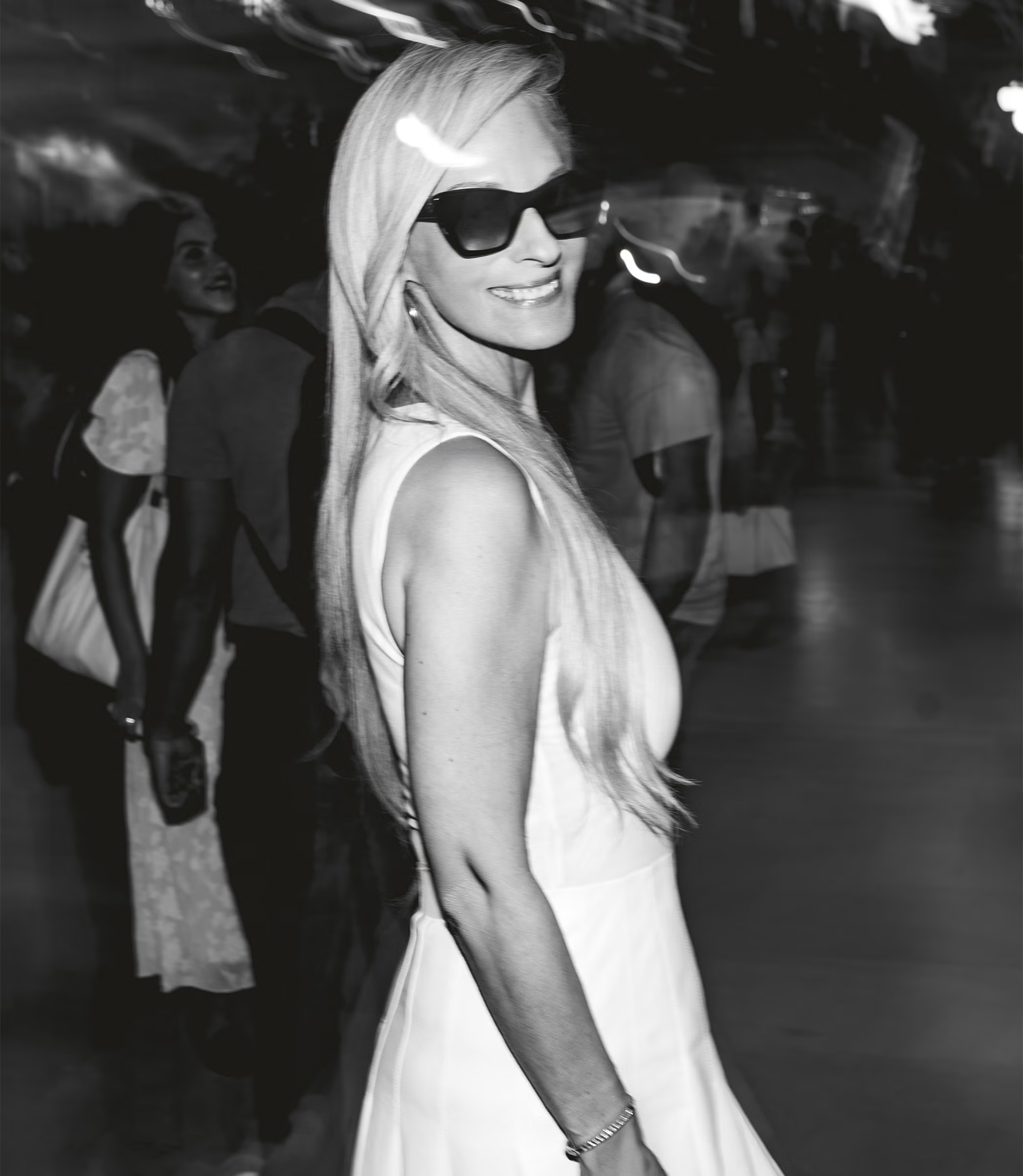
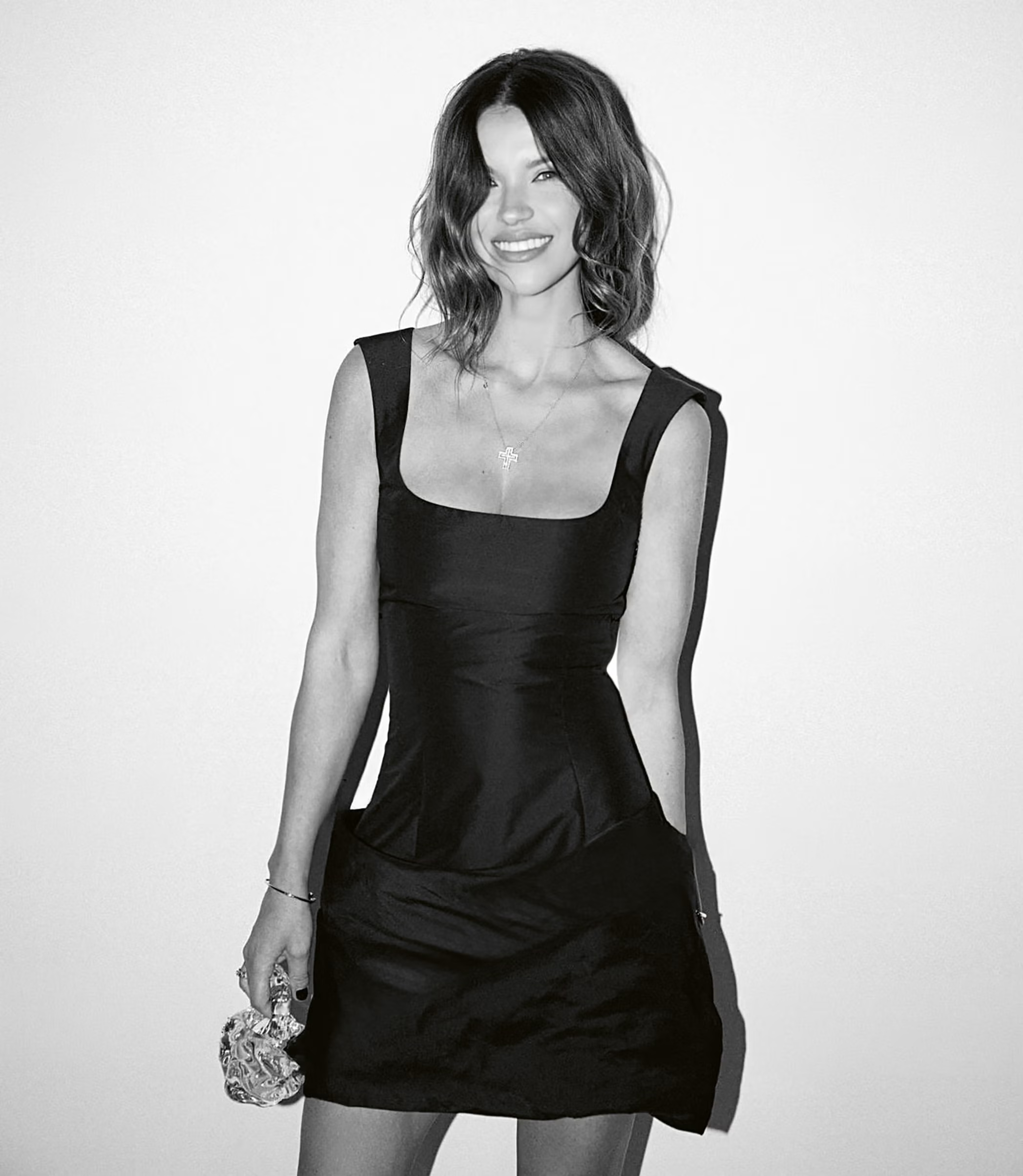
Consuelo Vanderbilt Costin
Foto: archiv Vogue CS
Michaela Seewald
We meet so many talented designers. What makes you look at someone and think: this is a person we want to work with?
Talent is the starting point, but for me there has to be something more. I am looking for that moment when I see a collection and immediately understand that the designer has a point of view. There has to be authenticity. You rarely see that. I want to feel that there is a real person and a real story behind the clothes, rather than someone simply following whatever is happening in the market.
When you have spent as much of your life around artists and creatives as I have, you develop an instinct for recognising someone who genuinely has something to say. But I am also an entrepreneur, so I look far beyond the collection itself. Are they ambitious? Resilient? Curious? Can they listen and evolve? Do they want to build a company as much as they want to make beautiful clothes? The designers who excite me most have that rare combination of creative conviction and entrepreneurial drive. They have a vision, but they also have the determination to take it out into the world.
So beyond a strong collection, what does a designer need today to build a successful global brand?
You can have an extraordinary product, but a global brand also requires distribution, strategic partnerships, marketing, storytelling, financial discipline and, above all, a very clear understanding of its customer. Technology has become an essential part of that equation.
One of the things that excites me most about what we are building at Global Studio is the opportunity to integrate technology directly into the fashion experience. We are exploring technologies that can transform a runway show from something people simply watch into something they can interact with – and shop.
Through a Click-to-Buy approach, we are creating a more immediate connection between what a customer sees on the runway and their ability to discover and purchase that product. We also see enormous potential in using technology and data to better understand customer response, extend a designer’s international reach and give emerging brands access to tools that historically were available primarily to much larger fashion houses.
Technology, in my view, should never replace creativity. It should amplify it. The designer and the product must always remain at the centre.
What, specifically, should working with Global Studio give a designer?
I want them to feel that they are not doing this alone. That is the most personal part of the entire project for me. I know what it is like to have a dream and to try to work out how to get from where you are to where you want to be. Sometimes one meeting with the right person can completely change the direction of your career.
We want to give our designers access to opportunities, expertise, connections and, above all, genuine strategic partnership.
That means connecting them with investors, retailers, media, luxury partners, manufacturing and distribution opportunities, technology platforms and strategic advisers. It also means helping them with the less glamorous but essential parts of building a brand: PR, social media, commercial strategy, production and the infrastructure required to operate at a much higher level.
Even a fashion show is about so much more than what happens on the runway. Creating a moment that can genuinely move a business forward requires an enormous amount of production, storytelling, technology, media and strategy. Our role is to build that entire ecosystem around a designer while allowing them to remain true to their creative identity.
We have always said that we do not want to create another platform that gives designers a brief moment of attention.
So where do you see our role once the show is over?
The show should be the beginning, not the destination. It can create an extraordinary moment, but that moment only has value if you know what to do with it afterwards. How do we turn attention into sales? How do we build distribution? What partnership should come next? Who should the designer meet? Is there an investment opportunity? Can we take the brand into another market? How can technology help us understand what resonated with the audience and turn that interest into a real commercial opportunity?
That is where Global Studio can be different. We bring fashion, investment, media, technology and relationships together within one ecosystem, with the intention of creating something that lasts beyond a single show or season.
I have spent much of my career creating opportunities for talented people, and that still matters deeply to me. Because success is not measured by how much attention a designer receives in a single day, but by what they are able to build from that opportunity over the next ten years.
Michaela, when did you realise that designers need more than visibility?
It happened gradually and, in fact, very naturally. For the past eight years, through Vogue, I have been working at the intersection of creativity, media and business, and during that time I have met an enormous number of designers. Vogue gives you an incredible opportunity to discover talent, introduce it to the world and connect it with people it might otherwise never reach.
But over time, I realised that even enormous media attention is not enough on its own. You can have a beautiful editorial, you can be on the cover, everyone can be talking about you… and you still may not have a functioning global business.
I think I am a connector by nature. When I see someone good, I immediately start thinking: Who should they meet? Where can we take them? Who can open the next door for them?
Jan Société is a great example. I was visiting him in his studio and almost spontaneously asked, “Are you looking for an investor?” A week later, he came back with a business plan. And I invested.
Not because I wanted to tell him what to design. Quite the opposite. The creativity has to remain his. But I saw a strong identity and talent, and I thought: What happens if we help build an even stronger business around that?
Jan is already a successful and established designer. His work has always attracted significant attention, and the collection he created for the Czech Olympic team reached international media and was recognised as one of the most distinctive. He is both talented and incredibly hardworking.
You say talent is everywhere, but opportunity is not. How does that shape the way you select designers for Global Studio?
Just look at our first designers. Every one of them is completely different, and each is at a very different stage of their business. That is exactly what I find so exciting.
Foto: Benedict Renč
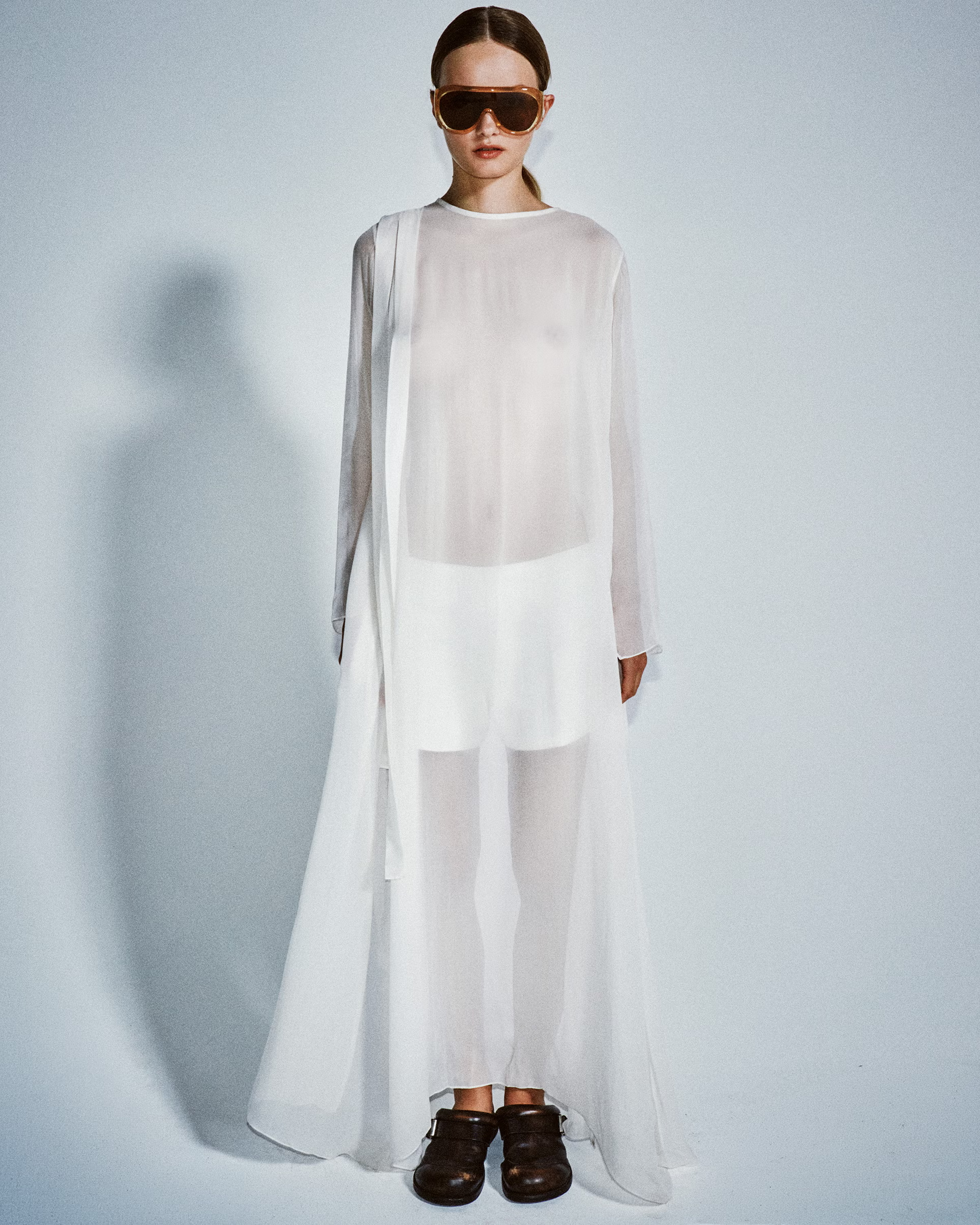
Šaty a šortky LORENA SAVARIA, brýle PHOEBE PHILO, boty ACNE STUDIOS
Lorena Saravia is already a fantastic example of a designer who has built a real brand. Her journey is remarkable: she started in Mexico, built a retail presence, created her own community and developed a very clear identity, eventually leading to a global collaboration with H&M.
This is not someone who needs us to explain how to start a brand. With Lorena, the question is: how do we help something that is already demonstrably working grow even further? How do we connect her with new markets, capital, distribution and the people who can accelerate the next phase?
Foto: Benedict Renč
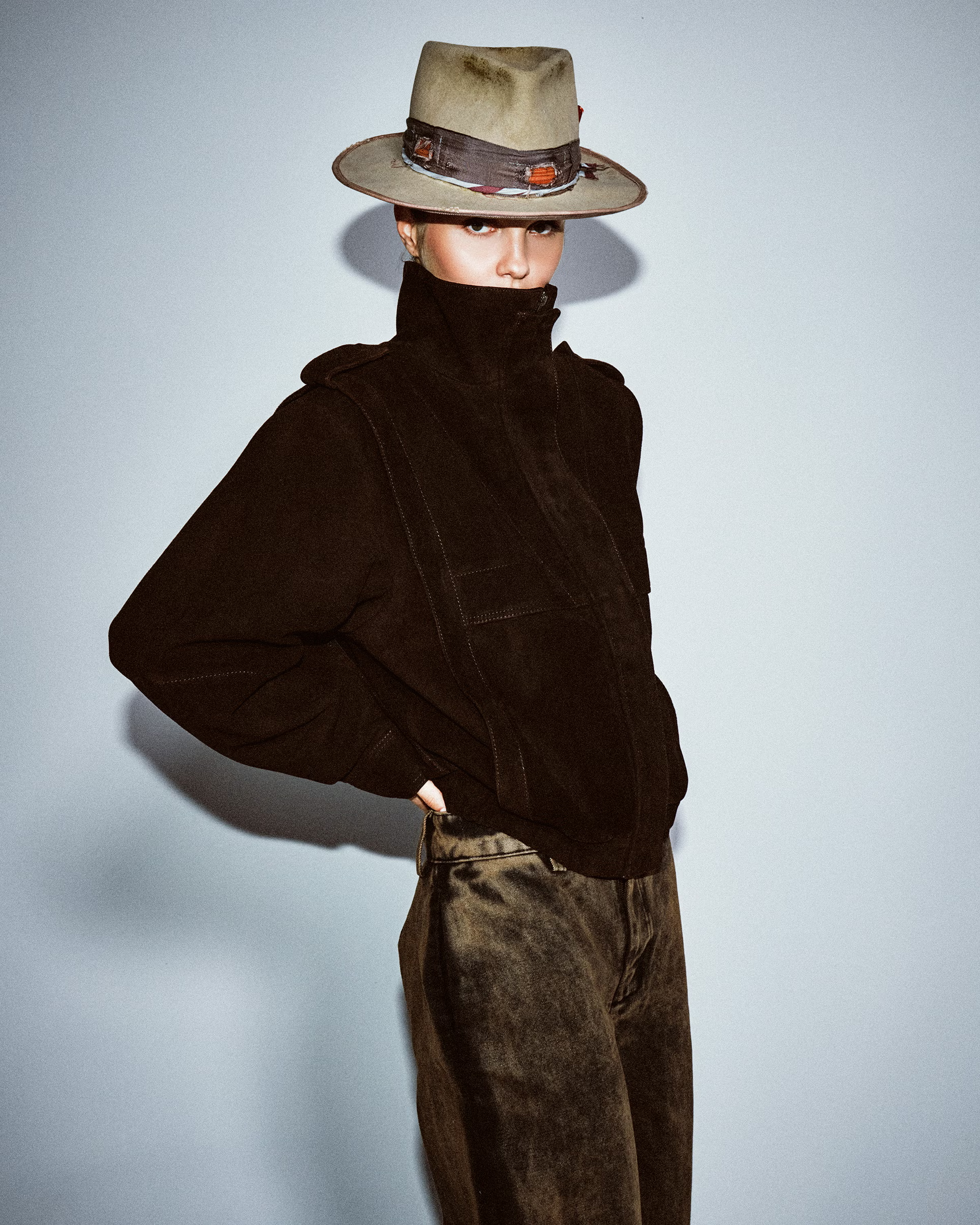
Bunda a džiny LORENA SAVARIA, klobouk SILVESTER MARIA
Then there is Dustin Glickman. At just twenty-two, this self-taught designer already has a very strong, almost instantly recognisable aesthetic: sharp tailoring, leather, rock — a kind of dark cowboy sensibility. He has already made an impact in Stockholm, but his story is only just beginning.
When I first saw his work, I had exactly that feeling that there was something there. So our role with him is completely different from our role with Lorena. We can be there much earlier in the journey. We can help him think about how a powerful creative talent becomes an international brand without losing what makes it so distinctive in the first place.
And the third designer is another story altogether: a different customer, a different stage of business and a different kind of potential. That, to me, is the essence of the Studio. We do not have one formula that we apply to everyone.
Foto: Benedict Renč
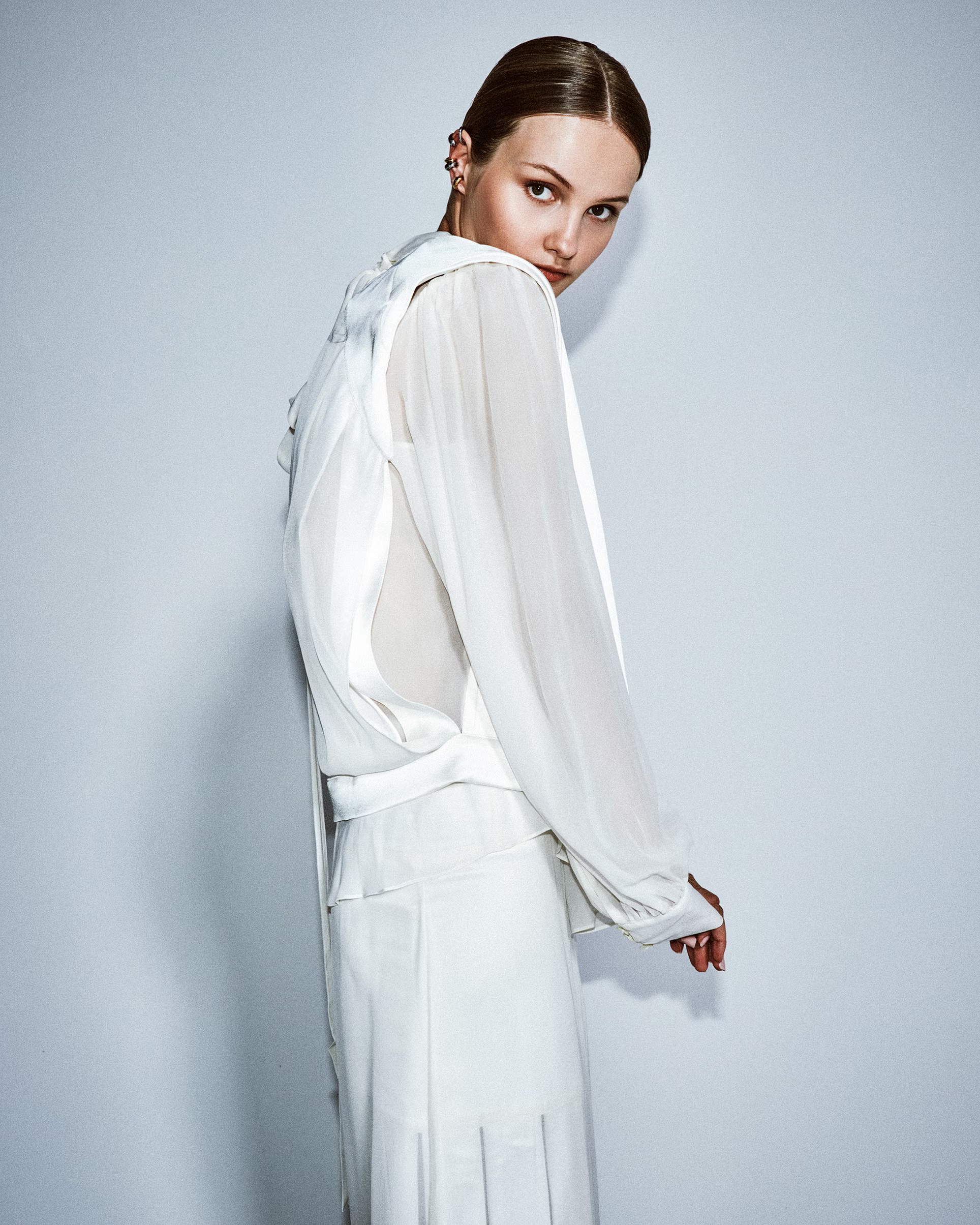
Top, sukně a vesta LORENA SAVARIA, náušnice FURIOSA
First, we have to understand what that person has already built, where they want to be in five years and what, specifically, they are missing in order to get there. Of course, I first have to fall in love with what they do. But very quickly, I start looking at the person as well. I want to see energy, ambition and character. Do they genuinely want to build something, or do they simply want to make a beautiful collection and be visible for a while? And then, of course, I look at the business.
What does a brand need in order to remain relevant five or ten years from now?
It is not enough to be cool for one season. You can have one viral moment, one celebrity client, one great show – but building a brand is an entirely different discipline.
You need creativity, but you also need finance. You need a great product, but you also need distribution. You need a story, but you also need a customer who comes back and actually buys.
That is why I love that at the Studio we bring together worlds that, in fashion, are too often kept separate: designers, media, investors, family offices, retail, technology and strategic partners. Because creativity without business can remain nothing more than a beautiful idea, while business without creativity gives people nothing to care about.
What would long-term success for Global Studio look like to you?
I do not want our success to be measured one day by how many fashion shows we have produced. A show is a moment. We are interested in what comes after it.
On September 15, at Grand Central in New York, we showed for the first time what can happen when you bring creative talent, media, technology, capital, business and a genuinely powerful network together in one place. Designers from different countries, with different customers and at different stages of their businesses, shared one runway. To me, that is highly symbolic.
We are not trying to turn them into one big brand. We want to understand what makes each of them distinctive and give each one what they need for the next stage of their journey. If, five or ten years from now, we look back and see that some of the brands we met at the beginning of their journey have become global businesses, then we will know the model worked.
Other brands can already come to us as well – including those with established million-dollar businesses and entirely different needs. They may want to professionalise their finances, supply chain, e-commerce, PR or distribution and prepare for the next stage of growth.
That is why Global Studio is not a traditional accelerator. It is a platform that can enter at different points in a brand’s life and offer something different at each one.
And ultimately, I think our greatest strength is people. Over years spent working across different worlds, you and I have both built powerful networks of relationships. Behind us is a professional team with expertise in investment, business operations and development, PR, strategic partnerships and capital raising.
Then there is our wider network: family offices, investors, retail partners, media and people across luxury, technology and entertainment. All of these can play a decisive role in a brand’s growth.
Vogue
Doporučuje
Vogue Daily
Tři dny v New Yorku. Debut Vanderbilt & Seewald Global Studia na fashion weeku
tým VOGUE29. 9. 2026
Móda
První přehlídka Vanderbilt & Seewald Global Studio v srdci New Yorku
tým VOGUE29. 9. 2026
Svatby